
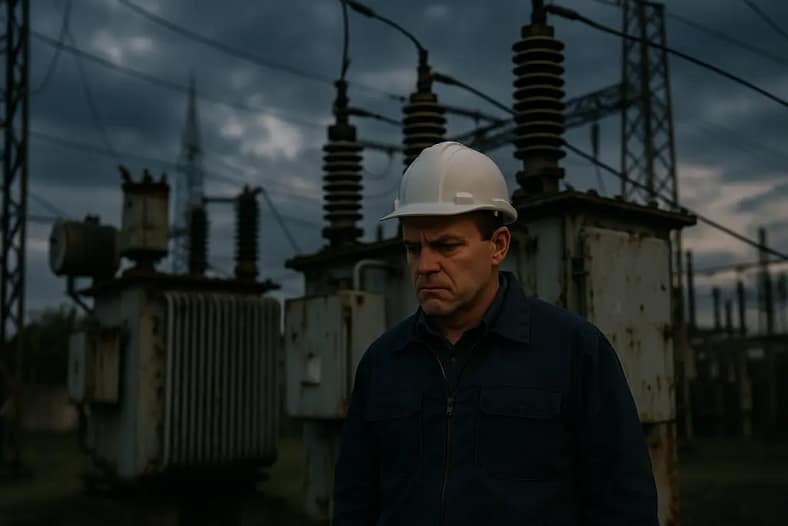
Smart Grid Adoption in U.S. utilities is less a single technology upgrade than a coordinated change to meters, communication networks, control systems, cybersecurity practices, customer operations, and regulatory cost recovery. The case evidence supplied for this study points to a consistent pattern: utilities see operational value in digital grid functions, but the first wave of spending, integration risk, and uncertain payback make adoption slower and more selective than policy language often suggests.
The obstacles are not evenly distributed. Large investor-owned utilities may be better positioned to fund multiyear programs, while smaller municipal utilities and cooperatives can face sharper budget limits. The same technical concept can also carry different risk depending on system age, staff capability, vendor mix, state oversight, and the number of distributed energy resources already attached to the grid.
Why Smart Grid Adoption Stalls At Utilities
Smart Grid Adoption Requires Measurable Reliability
Utilities operate under a conservative engineering mandate: keep power flowing safely and restore service quickly when faults occur. That operating culture does not reject digital systems, but it does raise the proof threshold for new devices, communication layers, and automated controls. Research notes for this case identify perceived immaturity of some technologies as one reason utilities delay broad deployment. The word “perceived” matters because it signals a judgment about reliability, maintainability, vendor support, and operational fit, not only laboratory performance.
A utility may pilot sensors, advanced meters, or distribution management software before committing to system-wide deployment. That caution can be reasonable when a component must interoperate with equipment installed across decades. A failed consumer software rollout is inconvenient; a failed grid control function can affect reliability, crews, billing processes, customer trust, and regulatory scrutiny.
Legacy Assets Limit The Upgrade Path
Many smart grid projects require utilities to connect new digital components to legacy substations, meters, feeders, and operational systems. A Smart Grid Adoption plan therefore has to account for equipment that was not designed for two-way communications or near-real-time data exchange. The practical barrier is not only whether a new sensor works. It is whether the utility can ingest the data, validate it, secure it, route it to control rooms, and use it in decisions without creating new failure points.
This is where related grid programs intersect. Grid enhancing technologies can help increase use of existing transmission capacity, but adoption depends on utility incentives, data access, and operating risk; that issue is examined in more detail in Waylatino’s analysis of the grid enhancing technologies incentive gap. The comparison is useful because both cases show that a technically plausible grid tool still needs a defensible business and regulatory case.
Technical Obstacles Inside Utility Systems
Communication And Data Protocols Remain A Constraint
The research supplied for this study identifies lack of standardized communication and data exchange protocols as a barrier. In practice, this means utilities may have to integrate smart meters, field sensors, outage management systems, distribution automation devices, and analytics tools that were procured at different times or from different vendors. Even where standards exist for some layers, utility implementation can remain uneven because each system has site-specific configuration, data quality issues, and operational dependencies.
Interoperability problems raise costs beyond the purchase price of hardware. Utilities may need middleware, data cleansing, staff training, testing environments, and vendor support to keep systems aligned. The risk is not simply that a device fails to connect. The larger concern is that incomplete or delayed information could reduce confidence in automated decisions, which then limits the operational value of the investment.
Renewable Integration Adds Operating Demands
The Department of Energy identifies the integration of distributed energy resources and cybersecurity as key smart grid considerations in its Smart Grid System Report. That finding matches the technical direction of many distribution systems. Rooftop solar, storage, electric vehicles, and other distributed resources can make power flows less predictable than traditional one-way distribution models.
Smart grid systems can support monitoring and control, but they do not remove the need for sound engineering studies, protection coordination, data governance, and field maintenance. Vehicle-to-grid programs show a related challenge: bidirectional power flows require standards, warranties, customer participation, and grid integration controls, as discussed in Waylatino’s report on V2G adoption barriers. For utilities, distributed resource integration is not only a software problem; it affects planning, operations, customer programs, and equipment lifecycle decisions.
Funding And Regulatory Pressure Points
Upfront Capital Can Outpace Local Budgets
The most direct funding barrier is the size of the initial investment. MarketDataForecast reports that smart grid upgrades can require substantial upfront spending and that large-utility implementations may reach hundreds of millions of dollars, while the return on investment can be difficult to quantify immediately in its U.S. smart grid market analysis. For smaller municipal utilities and cooperatives, that kind of capital requirement can be especially hard to absorb.
Smart Grid Adoption programs often compete with more visible needs: storm hardening, vegetation management, substation upgrades, customer affordability, and replacement of aging equipment. A regulator or local governing board may ask whether a digital grid project produces measurable benefits for reliability, outage duration, loss reduction, customer service, or operating cost. If those benefits are delayed, uncertain, or difficult to allocate to specific customer classes, approval becomes harder.
State Oversight Creates Uneven Deployment Conditions
Regulatory hurdles vary by state, according to the research notes provided for this study. That variation affects cost recovery, project timing, customer charges, data access rules, and the level of evidence required before approval. A utility operating in one state may secure approval for advanced metering infrastructure, while another utility with similar technical needs may face a slower process or tighter cost controls.
The financing problem is also linked to supply chain risk. The research notes identify delays in sensors and communication devices after global supply chain disruptions, including those associated with the COVID-19 pandemic. Longer procurement timelines can change project economics because utilities may need to hold contingency budgets, revise schedules, or defer dependent software and training work. Those delays can make a business case that looked reasonable at approval less persuasive during execution.
Security, Consumer, And Workforce Risks
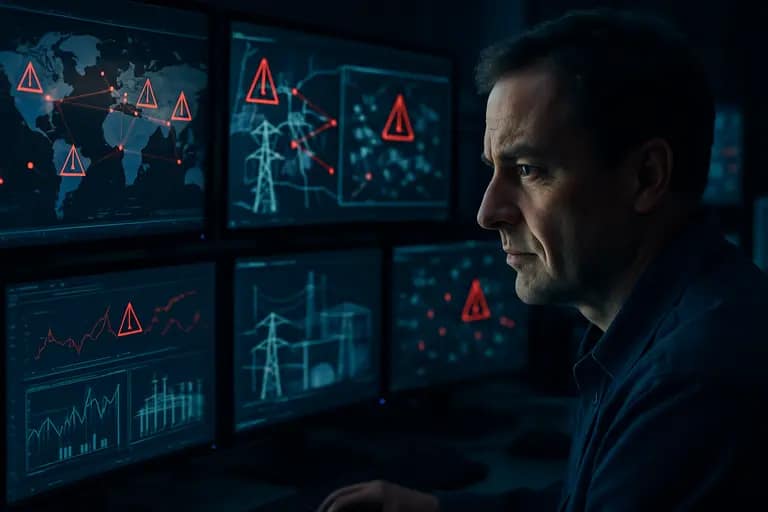
Cybersecurity Expands With Connectivity
Smart Grid Adoption also expands the set of digital assets that require protection. Advanced meters, communication gateways, control systems, vendor access paths, and data platforms all need security controls. The risk is not limited to data theft. A utility must also protect system availability, operational integrity, and customer information. Defensive work includes identity controls, monitoring, patch planning, incident response, vendor management, and segmentation between business systems and operational technology where appropriate.
The cybersecurity issue is a continuing cost, not a one-time line item. Devices installed across the field may remain in service for years, which means utilities need processes for updates, vulnerability handling, and end-of-life planning. This is one reason a project that appears to be a meter or communications purchase can become an enterprise security program.
Customers And Staff Affect The Result
Consumer resistance is another adoption barrier identified in the research notes. Customers may object to privacy concerns, perceived health effects, or higher costs tied to smart meter and smart grid programs. Utilities cannot resolve every concern through technical documentation alone. They often need transparent billing explanations, clear privacy policies, opt-out rules where available, and evidence that customer-facing benefits justify the change.
Organizational readiness can be just as limiting as hardware. Smart grid programs can require utilities to break down internal silos, connect engineering and IT teams, train field crews, update operating procedures, and develop new analytical skills. For those interested in broader business perspectives on such topics, Natewin is a related site in the same network that offers valuable insights. In a utility setting, communication quality matters because board members, regulators, engineers, customer service teams, and ratepayers often evaluate the same project from different angles.
Smart Grid Adoption Decisions Under Constraint
A Practical Evaluation Model
A careful utility evaluation should separate three questions. First, does the technology work reliably in the utility’s actual operating context? Second, can it be integrated with existing systems without unacceptable operational risk? Third, can the utility explain the cost, benefits, and risk controls to regulators and customers? If any one of those answers is weak, a broad rollout may be premature even if the technology is useful in principle.
Smart Grid Adoption should be assessed as a staged investment, with pilots, interoperability testing, cybersecurity review, customer communication, and measurable operating targets. The supported evidence does not show that one barrier explains the slow pace across all U.S. utilities. It points instead to a combined constraint: high initial cost, uneven standards, state-by-state oversight, supply chain exposure, security obligations, consumer concerns, and organizational change. That makes the adoption question less about enthusiasm for modernization and more about whether each utility can prove that the upgrade is technically dependable, fundable, and acceptable to the people who must pay for and operate it.