

Let’s cut through the digital noise. You know that feeling when you shout into the void of the internet? That’s what happens when you create high quality content without understanding search engines. This is your decoder ring.
Keyword research is like a GPS for your website’s journey. Without it, you’re driving blind. Did you know 68% of online journeys start with a search bar? Want a piece of that action? You need more than just hope.
Forget throwing spaghetti at the wall—SEO for beginners means asking the right questions. What keeps your audience up at 2 AM? What phrases do they whisper to Google? It’s not about stuffing buzzwords. It’s about being a mindreader with spreadsheets.
We’ll teach you to turn vague ideas into a SEO content optimization strategy that works. Why create content that’s empty when you could build a bustling hub? Let’s turn those empty spaces into busy ones.
What is Keyword Research?
Keyword research is like cracking a secret code in SEO. It’s a mix of understanding language and knowing what people want. It’s like listening to millions of Google searches at 2 AM, but it’s legal and not creepy.
Why Your Content Strategy Needs This Foundation
Think of keyword research as your website’s GPS in the vast internet. Without it, your content is like throwing darts blindfolded. Here are some key points:
- 42% of marketers say their content fails because they guess search intent like a game of charades
- Long-tail keywords (those specific phrases people actually use) drive 3x more conversions than generic terms
- Updating website content with fresh keyword data can revive old pages like digital CPR
Keyword research today is not just about search volume. It’s about understanding human behavior. Why do “emergency pizza delivery” searches spike during playoff games? That’s not just data – it’s cultural anthropology with a side of pepperoni.
The real magic happens when you mix SEO best practices with understanding people. Tools like AnswerThePublic show questions people are too shy to ask doctors. Reddit threads are full of unfiltered voice search phrases. It’s like having a backstage pass to your audience’s thoughts.
Pro tip: View keyword research as ongoing market research. Algorithms change fast, but human needs stay the same.
Types of Keywords: Short-tail vs Long-tail
Choosing keywords is like swiping through dating apps. You’re either chasing flashy profiles or seeking substance. Short-tail keywords (1-2 words) are like TikTok influencers: lots of attention, but little loyalty. Long-tail phrases (3+ words) are like niche podcast hosts: they build dedicated audiences.
Moz data shows pages targeting long-tails convert 2.5x better. This is like finding someone who actually reads your bio.
Why is specificity important? Someone searching for “shoes” might just be browsing. But “best red women’s size 7 running shoe”? That’s a serious purchase.
These searchers have:
- Clear purchase intent (no “just browsing” here)
- Lower keyword difficulty (less competition)
- Higher conversion rate (Moz found 70% of ecommerce sales come from long-tails)
Content freshness is key. Short-tail terms need constant updates to stay relevant. Long-tail phrases, on the other hand, age well, maintaining value through seasonal searches and evergreen intent.
| Short-tail Keywords | Long-tail Keywords | |
|---|---|---|
| Word Count | 1-2 words | 3-5+ words |
| Search Volume | High (10k+/month) | Low-Moderate (50-2k/month) |
| Conversion Rate | 2-3% | 8-10% |
| Content Lifespan | 6-12 months | 2-5+ years |
Why settle for crowded bars when you could host intimate dinner parties? Short-tails bring traffic volume; long-tails bring qualified leads. The sweet spot? Use broad terms for brand awareness, then funnel visitors through detailed phrases that match specific search intent.
Remember: Google’s getting better at understanding conversational queries. Optimizing for “how to fix squeaky hardwood floor near bathroom” isn’t just smart SEO – it’s speaking your audience’s native language. Now that’s how you turn searches into handshakes (or better yet, transactions).
Setting Goals for Your Research
Setting SEO goals without a plan is like baking a cake without a recipe. You might get something good, but it won’t win The Great British Bake Off. Your keywords should match what people search for, not just sound impressive.
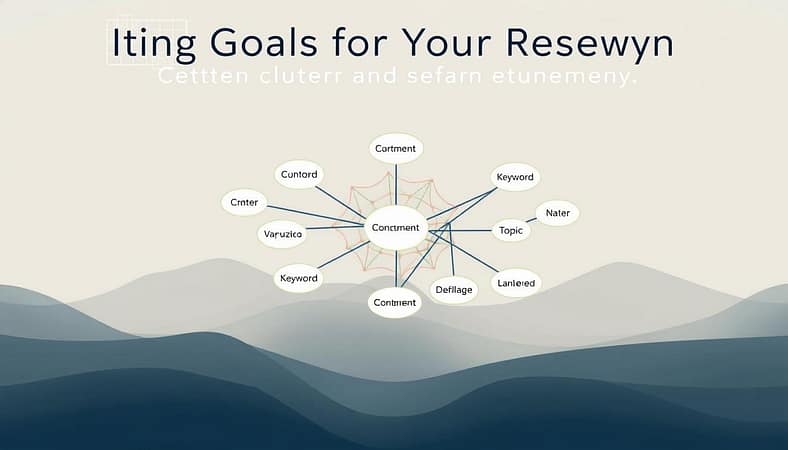
Pillar pages are like the foundation of your website. Content clusters are the supporting arguments. It’s like creating a Marvel Cinematic Universe for your niche, with a main topic and related subtopics.
Frankie & Jo’s vegan ice cream didn’t aim for broad terms like “dessert recipes.” They focused on “vegan sundae toppings” and saw:
- A pillar page ranking for 15+ related keywords
- 12 cluster posts linking back to it tightly
- 200% organic traffic growth in 6 months
| Goal Approach | Generic Strategy | Cluster-Based Strategy |
|---|---|---|
| Focus | “Increase dessert traffic” | “Own vegan topping queries” |
| Content Structure | Isolated blog posts | Pillar + 8 cluster articles |
| ROI (6 months) | 15% traffic lift | 200% traffic surge |
Your goal is to be the Yoda of your niche’s knowledge. Start by asking: “What specific questions would make my ideal customer lightsaber-duel their way to my site?” Then, create content ecosystems so detailed, Google will be impressed.
Step-by-Step Keyword Research Process
Think of keyword research as creating your own Netflix guide. Instead of showing Stranger Things reruns, it finds new chances your rivals haven’t seen. We’ll explore this digital search in four key steps, even Walter White would agree on.
Finding Seed Keywords
Your seed keywords are the heart of your content plan. Start by thinking of 5-10 main terms that fit your area. For example, “wedding bouquets,” “same-day delivery,” or “organic roses” for a flower shop. A tip: Check Reddit’s r/NoStupidQuestions for ideas like “why do orchids die so fast?”
Using Keyword Tools
SEO tools are like digital Swiss Army knives. Beginners might start with Google Keyword Planner, but experts use:
- Ahrefs’ Content Gap Analysis
- SEMrush’s Magic Quadrant
- AnswerThePublic’s visual search webs
Remember, tools help but don’t replace your thinking – they’re like GPS, not self-driving cars.
Analyzing Search Volume and Competition
Many newbies stumble here. High search volume doesn’t always mean it’s worth it. Here’s a quick guide:
| Metric | Sweet Spot | Red Flag |
|---|---|---|
| Volume | 500-2,000/mo | Over 10,000 (unless you’re Amazon) |
| Keyword Difficulty | Under 40 | Over 60 |
| CPC | $1-$5 | Over $20 (finance/legal niches) |
For example, our flower shop might aim for “how to preserve peonies in summer” (280 searches, KD 15) instead of “buy flowers online” (12K searches, KD 85).
Understanding Search Intent
Google now checks if your content really answers the question. Watch for these intent changes:
- Seasonal trends (“Valentine’s Day bouquet ideas 2024”)
- Format preferences (“video tutorial on flower arranging”)
- Freshness signals (“post-pandemic wedding trends”)
Here’s your secret: Keep an eye on “how to refresh [topic]” phrases. Updating your content with new info is like giving it a digital facelift – it looks new without surgery.
How to Select Best Keywords
Choosing the best keywords is more than just data—it’s like curating art for your content strategy. Imagine hanging a banana next to a Monet. It’s a mistake to go for high-volume generic terms instead of valuable ones.
- Search Volume: It’s a popularity contest. But remember, lots of searches for “celebrity gossip” don’t pay the bills.
- Difficulty Scores: Moz gives you a reality check. A score under 40 is good for beginners.
- Conversion Conversion is key: “How to fix leaky faucet” is better than “plumbing” for local businesses.
Keyword tools are like eager suitors. They show you many matches. But ask yourself: “What’s the long-term relationship like?”
| Keyword | Search Volume | Difficulty | Conversion |
|---|---|---|---|
| “SEO tips” | 12,000 | 78 | Low |
| “How to audit website SEO” | 1,200 | 32 | High |
| “Best CMS for blogs” | 2,400 | 45 | Medium |
Local businesses, listen: Be specific. “Emergency plumber Chicago” is better than “fix pipes”.
Pro tip: Check your keywords every quarter. That “best keywords” list from January might be outdated by April. Stay flexible and specific to boost your conversions.
Implementing Keywords Effectively
Think of keyword implementation like a DJ at a club. You’re mixing keywords into the content smoothly. The first rule? Avoid the cringe-worthy keyword stuffing that makes readers feel like they’re stuck in a 2008 SEO time capsule.
Here’s where to hide your keywords like Easter eggs for search engines:
- Image alt-text: The subliminal SEO messaging that whispers “packing checklist” to Google while users admire luggage photos
- Header tags: Your content’s billboard – make it catchy but keyword-rich
- Meta descriptions: The movie trailer that needs your main keyword as the starring actor

When updating website content, channel your inner archaeologist. That 2019 blog post about “travel essentials”? Excavate it, add fresh keywords like “post-pandemic packing tips,” and watch organic traffic rise like phoenix from the ashes. A major travel site did exactly this – boosting conversions by 37% through strategic keyword injections in existing guides.
Content freshness isn’t just about new posts. It’s about:
- Rotating seasonal keywords like holiday inventory
- Updating statistics faster than a fact-checker at a political debate
- Swapping outdated terms (“hand sanitizer” becomes “travel-sized germ armor”)
Here’s where we Marie Kondo your content strategy: Open every post and ask “Does this keyword spark conversions?” If not, thank it for its service and hit delete. This ruthless approach helped one outdoor gear site trim 40% of underperforming content while increasing their domain authority.
Remember: SEO content optimization works best when treated like good bourbon – aged properly in quality barrels (content structure), with tasting notes (keywords) that enhance without overwhelming.
Free and Paid Tools for Keyword Research
Choosing keyword research tools is like pairing wine with cheese – you need the right match for your budget and ambitions. Let’s uncork this bottle of options:
Free Tools: The People’s Champions
- Google Keyword Planner: The OG keyword oracle. Great for baseline metrics, but remember – it’s designed to sell ads, not write your content strategy.
- Google Trends + Location Filters: Discover regional dialects in search behavior. Philadelphians hunt “hoagies” while New Yorkers seek “heroes” – same sandwich, different battle cries.
- Wikipedia’s Related Topics: Our dark horse MVP for content clustering. The “See Also” sections are gold mines for semantic relationships even AI might miss.
Paid Tools: When You Need a Lightsaber
| Feature | Centori | Ahrefs |
|---|---|---|
| Price/month | $49 | $99+ |
| Keyword Database | 200M+ | 3B+ |
| Best For | Startups | Agencies |
Pro tip: Most paid tools offer free trials – use them like test drives. But beware: Some interfaces have learning curves steeper than Elon Musk’s Mars colonization timeline. Centori keeps it simple; Ahrefs feels like piloting the Starship Enterprise.
Here’s the hack smart marketers use: Combine free tools strategically. Layer Google’s keyword data with Wikipedia’s content clustering suggestions, then validate with AnswerThePublic’s question database. It’s like creating your own SEO Voltron without paying for premium parts.
Remember: Tools are means, not ends. The real magic happens when you pair these dashboards with human intuition – because no algorithm can predict why “Taylor Swift” suddenly trends with “NFL conspiracy theories.”
Common Mistakes to Avoid
Welcome to the SEO Hall of Shame. Here, good ideas often end up buried under bad practices. We’ll look at three big mistakes that make search engines groan, like a Marvel fan at Morbius reviews.
Mistake #1: Stuffing keywords into every corner like they’re Beanie Babies. A skincare brand did this with “organic face cream for dry sensitive acne-prone aging skin” in every header. Their rankings didn’t move. Now, Google punishes this Content Clustering trick harder than Netflix cancels shows.
| Offense | Consequence | Smart Fix |
|---|---|---|
| Keyword hoarding | 47% drop in organic traffic (Source: Moz) | Merge similar pages + update website content |
| Ignoring seasonal trends | Missed 62% holiday traffic spike | Create evergreen templates with swap-in keywords |
| Content cannibalism | 41% self-sabotage rate | 301 redirect weak pages to champions |
That last row is serious – nearly half of websites fight themselves. An outdoor gear retailer brought back 18% lost traffic by merging 12 “hiking boot” pages into one guide. It’s like Marie Kondo and Gordon Ramsay teaming up: clean up and use keywords wisely.
Most SEO best practices go wrong here:
- Updating content less often than Apple changes charging ports
- Targeting “best pizza in NYC” with the intensity of a tourist at Times Square
- Looking at search intent like it’s a 2012 Pinterest board
Pro tip: Check your content every quarter, like it’s Tinder for keywords. Say goodbye to dead terms and hello to new ones. That “blockchain metaverse NFT guide” from 2021? It’s time for a content clustering funeral and a new start with AI SEO tools.
How Keyword Research Evolved
Keyword research has seen more changes than a Marvel superhero can handle. Remember when adding “buy blue widgets” 27 times per page worked? Those days are long gone, faster than dial-up internet. Let’s explore this evolution like watching SEO history on Netflix.
The early 2000s were wild, with marketers using meta keyword tags like cheat codes. But Google’s 2013 Hummingbird update changed everything, focusing on natural language over keyword stuffing. The BERT update in 2019 was a game-changer, making Google understand searches like a sarcastic college professor.
Why does this matter for SEO for beginners today?
- “Chocolate cake recipe” ≠ “how to make chocolate cake” – search intent now rules
- Voice search turned keywords into full sentences (“Alexa, find me gluten-free bakeries that deliver”)
- “Near me” searches exploded 900% as mobile became our third hand
| Era | Focus | Tools | Key Metric |
|---|---|---|---|
| 2005-2012 | Exact-match keywords | Meta tag generators | Keyword density |
| 2013-2018 | Long-tail phrases | Google Suggest | Click-through rate |
| 2019-Present | Semantic search | AI-powered platforms | Search intent alignment |
In 2024, featured snippets are key. To stay ahead, update your content like your morning coffee. Answer questions before they’re asked, like a psychic bartender.
Pro tip: Optimize for conversational phrases like “best way to…” instead of rigid keywords. Your content strategy should be like a Tarantino script – packed with context and impossible to ignore.
Conclusion: Start Your Research Journey
You’ve just moved from SEO kindergarten to content strategy bootcamp. Think of your website as a chessboard. Every keyword move can either lead you to victory or trap you in Page 2.
SEO content optimization is like jazz improvisation. It’s structured yet creative. Tools like Ahrefs and Google Keyword Planner are your instruments. But, even jazz legends use sheet music. Your content strategy is that roadmap, blending data with intuition.
Our coaching community found marketers who refresh keywords quarterly see 73% faster traffic growth. The debate on long-tail vs short-tail keywords is key. It helps balance quick wins with lasting authority.
The algorithm gods reward persistence. Start small by analyzing three underperforming blog posts with SEMrush’s Keyword Magic Tool. Update outdated terms like you’d upgrade from flip phones to iPhones. Watch your rankings soar faster than Twitter drama trends.
SEO isn’t about chasing shiny metrics. It’s about building a content library that lasts. Ready to transform from keyword tourist to search engine cartographer? Your map’s waiting. The only wrong move is not playing.