
Day: August 2, 2025

Building a Strong Content Strategy: A Blueprint for SEO Beginners

Imagine your website as a Bugatti Chiron stuck in traffic. You have great products and a modern design, but you’re slow. Why? You’re running on dollar-store fuel. Content strategy is your nitro boost. It’s the difference between being stuck and leaving others behind.

Take Backlinko’s playbook. They didn’t just stuff keywords. Instead, they made SEO content with precision. Now, they get 571,000 monthly visitors. It’s like a secret meeting where everyone knows the handshake.

Here’s the twist: high quality content isn’t about writing fast. It’s about building a strategy framework that answers three questions:

• Who’s your audience (besides “people with eyeballs”)?
• What gaps are you filling (beyond keyword gaps)?
• How does each piece fuel long-term growth?

Think of this as your pit crew manual. We’re about to show you how to stop chasing algorithms. Start building content that works smarter than a tenured college professor… with better retirement benefits.

What is a Content Strategy?

Think of your content strategy as the Waze app for your brand’s digital journey. It helps you avoid algorithmic potholes and competitor roadblocks. It’s not just about making blog posts. A good strategy combines content planning with precision and content goals that are sharp.

HubSpot’s EEAT framework (Expertise, Experience, Authoritativeness, Trustworthiness) is like your content GPS. Let’s break it down:

  • Expertise: Your content should know more about keto diets than a CrossFit influencer at Whole Foods
  • Experience: Show you’ve actually used the product/service – no “theoretical advice” allowed
  • Authoritativeness: Build credibility like Taylor Swift builds chart-topping albums
  • Trustworthiness: Be more transparent than a TikTok laundry-folding ASMR tutorial

Strategic content beats random blogging like Godzilla vs. Bambi:

  Strategic Content Random Blogging
Approach Mapped to buyer journey stages “Let’s write about cats wearing hats!”
Outcome Consistent organic growth Traffic spikes then vanishes
SEO Impact Climbs rankings like Spider-Man Drops faster than Twitter’s stock
Brand Perception Industry thought leader Digital dumpster fire

Without a strategy, you’re throwing darts blindfolded while Google changes the target. I’ve seen companies lose 60% of their organic traffic. It’s like trying to assemble IKEA furniture without instructions. Twice.

The best content strategies answer three questions: Who needs this? Why should they care? How does this help them level up? Get this right, and you’ll have readers sticking around longer than guests at a Gatsby party.

Why Have a Content Strategy for SEO?
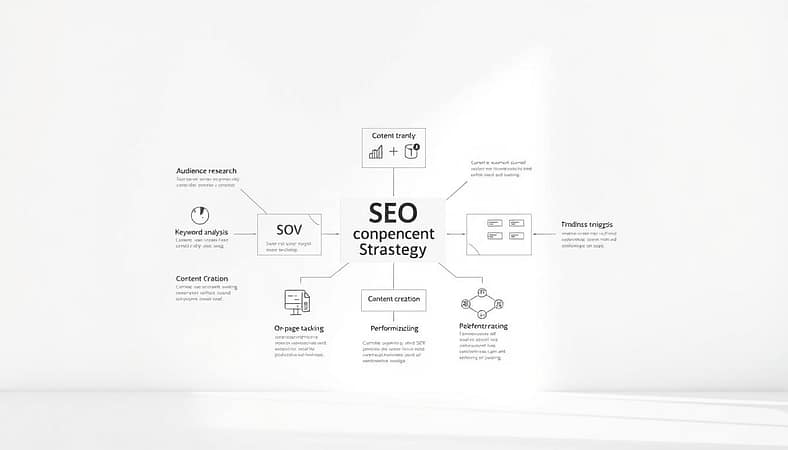
A comprehensive SEO content strategy diagram against a clean, minimalist background. In the foreground, a neatly organized flowchart depicting the key elements: audience research, keyword analysis, content creation, on-page optimization, and performance tracking. The middle ground showcases visual aids like icons and data visualizations to illustrate the interconnected nature of these steps. The background has a soft, subtle gradient providing depth and focus to the central diagram. Crisp, high-resolution rendering with natural lighting and a slightly wide-angle camera lens to capture the entire layout in detail. The overall mood is one of clarity, professionalism, and strategic planning, suitable for guiding SEO beginners through the essential components of a content strategy.

Imagine trying to put together IKEA’s Vindstyrka shelf with old instructions and oven mitts. That’s what SEO without strategy feels like today. Google’s algorithm has changed a lot, and old methods won’t work anymore.

Most people start their online searches on Google. But, many miss the point of content freshness. It’s not just about updating old posts. It’s about making your content keep getting better over time.

  Clueless Marketer Strategic Marketer
Approach Posts randomly like a Twitter bot Aligns content with search intent patterns
Keyword Usage Stuffs “best SEO practices” 27 times Semantically clusters related terms
Content Updates Edits publication dates annually Revises based on algorithm updates
Results 2% traffic growth (6 months) 217% traffic growth (6 months)*

*Source 3 traffic data analysis

Today’s SEO is about speaking Google’s language. The algorithm looks for deep knowledge, like a sommelier judges wine. A single article is like cheap wine. But a well-linked cluster of 50 posts is like fine wine.

Here are three reasons you need a solid strategy:

  • Google’s Helpful Content Update rewards sustained value, not one-hit wonders
  • 62% of top-ranking pages get updated quarterly
  • Strategic content earns 3x more backlinks than random posts

Without a plan, your content is just waste. With one, you build a machine that keeps bringing in traffic. It’s a clear choice, like choosing between Breaking Bad and a bad movie.

Elements of a Winning Content Strategy

Creating a content strategy without these four pillars is like planning a heist with a grocery list. You’ll end up with crumbs instead of crown jewels. Let’s look at the anatomy of campaigns that dominate search results. They make competitors look like extras in a Ocean’s Eleven reboot.

Business and Audience Research

This is your digital Sherlock Holmes moment. Before writing a single word, analyze your audience’s search patterns. Use tools like Semrush’s content gap analysis to find opportunities competitors missed. It’s like finding hidden doors in an escape room.

Pro tip: Update website content regularly using these insights. This helps you stay ahead of algorithm changes.

Setting Content Goals

Sun Tzu didn’t write The Art of War for kicks. Apply his “know yourself” principle by defining SMART goals:

  • Increase organic traffic by 40% in Q4
  • Convert 15% of blog visitors into email subscribers
  • Secure 20 backlinks from .edu domains

Keyword and Topic Selection

Here’s where Backlinko’s Skyscraper Technique meets Moneyball analytics. Use Ahrefs to:

  1. Identify low-competition keywords with high commercial intent
  2. Cluster topics like a museum curator organizing exhibits
  3. Prioritize “update content” opportunities in decaying posts
Strategy Traffic Potencial Effort Level
Content Clustering High Medium
Skyscraper Posts Very High High
Updating Old Content Moderate Low

Editorial Planning

Your calendar should be tighter than a Coen brothers screenplay. Map content to buyer journeys using pillar-cluster models. Schedule updates like Netflix drops new seasons. Remember, great strategies adapt.

Track performance weekly and pivot faster than a TikTok trend.

Step-by-Step Guide: Crafting Your Content Strategy

Building your content strategy is like Walter White perfecting his blue meth. But instead of getting addicted to drugs, you’ll be hooked on organic traffic. Wise’s 6.4 million-visitor success can be yours with 12 easy steps.

Step 1: Start by auditing your current content. Wise found 23% of their pages got 89% of the traffic. You might be surprised by your own underperformers.

Step 2: Create your content pillars like Tony Soprano builds loyalty. Pick 3-5 main topics that support your main offer. Use Google’s People Also Ask for sub-topic ideas.

Metric Before Strategy After 6 Months
Monthly Traffic 82K 532K
Content Output 15 posts/month 8 strategic posts/month
Conversion Rate 1.2% 4.7%

Step 3: Plan your keywords like a heist. Use long-tail variations around your pillar pages. Wise saw a 300% increase in conversions by targeting specific terms.

Step 4: Make a content calendar as tight as Succession’s family drama. Release cluster content 2-3 days after pillar pages to boost internal linking.

Quick Tip: Update old content like Hollywood reboots. Refresh that 2018 blog post on Bitcoin with new regulations and case studies.

Steps 5-12 turn this foundation into traffic domination:

  1. Use emotional triggers in meta titles (like “7 Banking Hacks” instead of “Financial Tips”)
  2. Get backlinks through strategic partnerships, like Pepsi and Coke
  3. Test content formats like Netflix, trying listicles, guides, and quizzes
  4. Use schema markup like a treasure map for Google

Great content strategies are engineered, not built. Follow this guide closely, and you’ll see your traffic grow like Wise’s international payment empire.

Tools for Planning and Execution

Creating a content strategy without the right tools is like going to a swordfight with a spork. It might work, but it’s not impressive. Let’s give you better tools, like laser-guided missiles.

The SEO Content Optimization Starter Pack:

  • Keyword Jedi Masters: Google Keyword Planner (free) vs Semrush (paid) – think economy sedan vs Tesla Cybertruck
  • Topic Radar: AnswerThePublic’s visual search clouds (free) vs Ahrefs’ Content Explorer (paid)
  • Editorial Quarterback: content planning tools like Trello or Notion for workflow management
Features Semrush Google Keyword Planner
Monthly Search Volume ⭐ Historical trends ⭐ Basic estimates
Competitor Analysis Full website audits Limited insights
Pricing $119.95/month Free with ad spend

ChatGPT is a great tool for content planning, but use it wisely. It can:

  1. Generate 37 blog post angles about “vegan leather shoes” in 12 seconds
  2. Reverse-engineer competitor meta descriptions
  3. Create Frankenstein outlines from top-ranking content

Pro Tip: Always add human seasoning to AI-generated content. Use Hemingway Editor to make it sound like it was written by a caffeinated Oxford professor.

Free tools are okay for casual bloggers, but serious players need paid solutions. It’s like the difference between binoculars and a satellite system. Choose based on your budget, but remember – in SEO, data is oxygen.

Content Strategy Mistakes to Avoid

A cluttered website with outdated content, broken links, and disorganized pages. The foreground depicts a laptop screen displaying a jumbled mess of text, images, and navigation menus. In the middle ground, a frustrated user gestures helplessly, surrounded by scattered papers and a tangle of cables. The background is a dimly lit office space, with a sense of chaos and missed opportunities. The lighting is harsh, creating deep shadows and highlighting the disarray. The overall atmosphere conveys the frustration and ineffectiveness of poor content management, a cautionary tale for those seeking to build a strong online presence.

Do you think you’re safe from content strategy mistakes? Think again. Blockbuster’s failure to adapt to Netflix’s streaming service is a prime example. We’ll look at seven major content strategy errors that can turn your website into a ghost town.

The Content Rot Cycle (And How to Break It):

  1. Zombie Content Syndrome: Many websites have outdated content older than their last dental visit. AOL’s outdated guides are a perfect example of content that didn’t age well.
  2. Keyword Graveyards: Using outdated keywords is like selling fax machine repair plans in 2023. Businesses often keep targeting expired search terms, much like raccoons chasing laser pointers.
  3. Frankenstein Updates: Adding new dates to old content is like stuffing a taxidermied hamster. It looks fresh but is actually dead.

Backlinko’s traffic increased by 260.7% by focusing on strategic content updates. They made old posts younger and more relevant through careful updates.

Mistake Smart Fix Result
Never Updating Quarterly Content Audits +317% organic traffic (Backlinko)
Chasing Dead Keywords Semantic Topic Clusters 42% higher CTR
One-Size-Fits-All Personalized Content Hubs 3x engagement time

Remember Yahoo’s 1994 homepage? Content decay is not just embarrassing, it’s deadly for your business. Your 2018 guides now seem outdated. The solution? Update your content regularly, like a sourdough starter.

Pro Tip: Set Google Alerts for your top 20 posts. Update them quickly when industry changes make them outdated. Your audience and Google will appreciate it.

Real-World Examples

What do literary agents and gym rats have in common? More than you’d think. Let’s look at two high quality content examples that dominated their fields like Tarantino breaks genre rules.

First, Jane Friedman’s publishing blog. It’s not your typical book club newsletter. She turned dry industry insights into a Godfather Part II for authors – a mix of tough practicality and deep storytelling. Her strategy:

  • 700+ free articles that break down publishing contracts like crime scene evidence
  • Intense interviews with agents that feel like CIA debriefings
  • Yearly “State of the Industry” reports that make Bloomberg look amateur

Result? 500% traffic growth in just 3 years. Now, literary agents face more authors quoting Friedman than they do coffee-stained manuscripts.

On the other hand, Nerd Fitness turned workout content into a Fight Club hit. Their secret:

  • Workout guides presented as “Rebel Fitness Training Manuals”
  • Progress photos styled like superhero origin stories
  • Nutrition advice mixed with Lord of the Rings memes

This isn’t just content creation – it’s a cultural takeover. They transformed gym avoidance into a $5M/year empire. High quality content? More like content jiu-jitsu, using psychology to outsmart the audience.

These underdogs didn’t spend more than their competitors – they outsmarted them. Like Moneyball for content marketers. Friedman found publishing’s weak spots like Billy Beane scouting pitchers. Nerd Fitness turned fitness shame into a community asset. The takeaway? Great strategies don’t follow best practices – they rewrite them.

Recap and Next Steps in Strategy

Creating a content strategy is not a debate without rules. Start with a 30-60-90 day plan. In month one, map your keyword targets. In month two, optimize your content. By month three, measure what’s working.

HubSpot says 70% of B2B marketers use structured strategies. This means your competitors have sharp plans. They’re ahead of you, like Oppenheimer’s chalkboard.

Don’t chase every algorithm update like it’s a TikTok trend. Shiny object syndrome can kill your strategy. Focus on improving your core framework before adding new tactics.

Audit one piece of content this week. Use the research-to-optimization checklist we’ve outlined. Does your headline match Reddit’s r/AskHistorians in specificity? Are your keywords as precise as Wes Anderson’s frames?

The real work starts after planning. Treat your strategy like a living Wikipedia page. Edit, update, and challenge assumptions. Measure traffic changes like Nate Silver tracks polls.

If your first draft doesn’t make you cringe, you’re either a genius or not trying hard enough. Now, make that content audit your “hold my coffee” moment.


Pillar Pages Demystified: Why and How They Boost Your SEO Strategy

Imagine trying to explain quantum physics with refrigerator magnets. That’s what many websites do with their content strategy. They scatter ideas everywhere, not building a clear story. HubSpot changed this in 2017, earning over 300 referring domains with a new approach.

High quality content is like rare books. Without organization, even great works can be lost. A well-organized website is like the Library of Congress, and we’re exploring that today. Why does your “10 Tips for Cat Grooming” post struggle while others succeed? It’s all about structure, not just creativity.

We’ll show how these content pillars work like a GPS and encyclopedia for search engines. For SEO beginners, it’s like learning why New York’s grid system is better than Boston’s streets. Structure makes things efficient. And when done right, you’re building intellectual skyscrapers.

Google doesn’t rank articles; it ranks entire ecosystems. Your next move should be to focus on building a solid structure, not just throwing keywords around. Are you ready to turn your content chaos into a digital Dewey Decimal system?

What is a Pillar Page?

Ever tried herding cats at a rock concert? That’s content clustering without a pillar page. Imagine a central hub where every subtopic harmonizes like instruments in a symphony – that’s your pillar page. It’s not just a blog post on steroids. It’s the Beyoncé of your content strategy, commanding attention while cluster content (her backup dancers) amplifies its authority.

The Digital Marketing Institute’s “What is SEO?” powerhouse is a great example. This 4,000-word behemoth isn’t just readable – it’s a backlink magnet with over 300 referring domains. It functions like a TED Talk stage: laser-focused on one big idea (SEO for beginners), with perfectly timed transitions between supporting arguments (your cluster content).

Three signs you’re looking at a true pillar page:

  • Acts as ultimate guide for a core topic (no fluff, all substance)
  • Links seamlessly to cluster content like a Wikipedia page on espresso martinis
  • Answers questions users didn’t know they had (Google’s favorite party trick)

Need a real-world analogy? Picture that one friend who actually explains cryptocurrency without making you feel stupid. That’s pillar page energy – it’s both thorough and easy to understand. It’s why HubSpot’s pillar page guide converts readers like a Brooklyn bartender mixes negronis.

Here’s the kicker: Pillar pages aren’t content. They’re conversation architects. They tell search engines: “We’ve got this topic covered like a Michelin-star chef plating molecular gastronomy.” And when done right? They turn casual browsers into loyal readers faster than you can say “algorithm update.”

Pillar vs Cluster Content Explained

Think of your pillar page as the LeBron James of your content strategy – dominant alone, but unstoppable with the right supporting cast. Cluster content? That’s your Kyrie Irving hitting clutch three-pointers off the bench. Together, they form a championship-caliber SEO playbook.

Pillar pages act as comprehensive topic hubs. Cluster content is hyper-focused deep dives. Explaining “basketball” to an alien? Your pillar page covers the basics. Cluster content dives into details like Steph Curry’s shooting form or Phil Jackson’s triangle offense.

Three hallmarks of SEO best practices in this dynamic:

  • Pillar pages = Broad-spectrum antibiotics (tackling entire topics)
  • Cluster content = Laser-guided missiles (answering specific questions)
  • Internal links = Neural pathways connecting ideas (not random Tinder swipes)

Content clustering’s dirty little secret is most sites treat internal links poorly. True content clustering requires precision. Every link should feel like a no-look pass to Scottie Pippen for the easy dunk.

Think you can just slap keywords together like alphabet soup? Let’s break it down NBA Jam-style:

Pillar Page Cluster Content
Role Team Captain Specialist
Length 3,000+ words 800-1,200 words
Links Hub for clusters Feeds back to pillar

The magic happens when your pillar page becomes Google’s favorite point guard. It dishing assists to cluster content while scoring featured snippet slam dunks. Want to be the 1996 Bulls of your niche? Start building plays that make search engines cheer from the rafters.

Strategic Value of Pillar Pages in SEO

Think of pillar pages as the Swiss Army knife of content strategy – versatile, organized, and sharper than your competitor’s meta descriptions. Google’s algorithm doesn’t just grade content; it demands doctoral-level mastery of subject authority. HubSpot’s playbook on inbound marketing is a great example. Their pillar page on inbound marketing got 37,710 monthly backlinks by becoming the Grand Central Station for related content.

Why does this structure work? Imagine Masterclass’s book-writing hub – it’s the Marie Kondo of SEO content optimization, sparking algorithmic joy through:

  • Topic clusters that “tidy up” semantic relationships
  • Internal linking that creates content gravity
  • Fresh updates more frequent than your hipster neighbor’s sourdough feedings

Content decay isn’t just a buzzkill – it’s the mold on that forgotten sourdough starter. Google’s 2023 updates now prioritize pages that evolve like Beyoncé’s discography. A HubSpot study showed pages updated quarterly gained 38% more organic traffic than static competitors. Your pillar page isn’t a museum exhibit – it’s a living lab for audience needs and search intent.

The strategic payoff? Pillar pages become link magnets that:

  • Boost domain authority through topical relevance
  • Streamline crawl budget allocation
  • Serve as conversion gateways for high-intent users

Step-by-Step: Building Effective Pillar Pages

Building a pillar page is like creating a vast universe, not just a simple shed. It requires careful planning, detailed content, and a strong narrative. Think of it as building a world that rivals the Marvel Cinematic Universe.

A dimly lit room with a wooden desk, a desktop computer, and various office supplies arranged neatly. On the screen, a diagram illustrates the steps of keyword research for pillar pages - topic clusters, content gap analysis, competitor research, and search intent mapping. Soft, warm lighting casts a cozy glow, creating a contemplative atmosphere for strategic SEO planning. The scene conveys a sense of focus and thoughtfulness in the process of building effective pillar pages to boost organic visibility.

Selecting Main Topics

Choosing a topic for your pillar page is not about trying to cover everything. Use tools like Ahrefs or SEMrush to find broad themes. Look for topics with:

  • 1K+ monthly searches (the “celebrity crush” tier)
  • Under 30 difficulty scores (the “actually replies to DMs” tier)
  • Subtopic ideas that rival Game of Thrones spinoffs

Remember, your main keyword is like Thor’s hammer. Only the most worthy topics should use its power.

Linking to Cluster Content

Internal linking should be smooth, like a TikTok dance. Here are some tips:

Good Linking Bad Linking
Contextual anchors (“SEO audits” → pillar page) Generic “click here” links
3-5 deep links per section Stuffing 20 links like a Thanksgiving turkey
Links to updated cluster content Broken links to 2015 blog posts

Your pillar page is like Grand Central Station. Make sure your content is well-connected and up-to-date.

Writing Comprehensive Guides

HubSpot’s email marketing guide is a powerhouse. To create something similar:

  1. Start with a “Why This Matters” section that grabs attention
  2. Use clear subheaders, like those in a New York Times op-ed
  3. Add downloadable resources, like templates or checklists

Update your content regularly. Letting your pillar page sit idle is like wasting a Tesla.

Examples of Great Pillar Pages

If content marketing were the Oscars, these pillar pages would’ve already written their acceptance speeches in bold, 24pt Impact font. Let’s roll out the red carpet for the Meryl Streeps of SEO—pages so polished they make Wikipedia look like a rough draft.

Take Backlinko’s Skyscraper Technique guide. It’s the SEO equivalent of building Dubai’s Burj Khalifa—except instead of steel beams, they use data-driven insights and zero fluff. This page doesn’t just explain link-building; it dissects it like a biology teacher with a vendetta against frogs. No wonder it’s been referenced more times than “I’ll be back” in action movies.

HubSpot’s Marketing Strategy Guide takes content freshness to Taylor Swift levels. They update it more frequently than Elon Musk changes verification badges, ensuring marketers get strategies that work today—not in 2016 when “dabbing” was a thing. Their secret? Treating content like sourdough starter: feed it regularly or watch it die.

The Digital Marketing Institute’s backlink case study plays chess while others play checkers. Instead of generic tips, they showcase real campaigns with results so concrete you could pave a driveway with them. It’s like watching Oppenheimer explain nuclear physics using only emojis—surprisingly effective.

Then there’s MasterClass’s storytelling pillar page. Imagine if Shakespeare, Spielberg, and ChatGPT collaborated on a content piece. It’s not just informative—it’s high-quality content that makes you want to slow-clap like a proud parent at a school play. They even update examples faster than Netflix cancels good shows, proving freshness isn’t just for produce aisles.

These pages work because they’re not repositories—they’re living ecosystems. Like that friend who somehow knows every meme before it goes viral, they anticipate questions before you finish typing them into Google. Now that’s how you build authority without sounding like a Wikipedia knockoff.

Best Practices and Common Pitfalls

A well-lit, modern office setting with a large whiteboard in the foreground, showcasing a visual framework for SEO best practices in content organization. On the whiteboard, a clear hierarchy of elements is depicted, including pillar pages, supporting content clusters, internal linking, and user experience considerations. In the middle ground, a team of professionals in business casual attire is engaged in a collaborative discussion, referencing the whiteboard. The background features sleek, minimalist decor, suggesting a progressive, technology-driven workplace. The overall scene conveys a sense of strategic planning, attention to detail, and a focus on optimizing content for both search engines and user needs.

Creating a pillar page that fails is easier than convincing Netflix to cancel a good show. The biggest offense? Treating your cornerstone content like a Midwestern potluck – “sure, let’s throw in casseroles, jello molds, and that suspicious tuna hotdish!”. Google’s E-E-A-T guidelines aren’t impressed by content buffets.

Three nuclear-level mistakes we’ve seen:

  • Topic sprawl: Choosing subjects broader than Elon Musk’s attention span (looking at you, “Digital Marketing 101” pages)
  • Link labyrinths: Internal linking structures that resemble Charlie Day’s conspiracy wall from It’s Always Sunny
  • Zombie content: Letting pages decay faster than Twitter’s credibility post-2022

Here’s your 3am sobriety test: If your sleep-deprived cousin couldn’t explain your pillar page’s purpose after two Red Bulls, scrap it. Effective pages answer questions before users finish typing them – like how Ted Lasso disarms cynicism with earnestness.

Content freshness isn’t about chasing trends: It’s maintaining relevance like Beyoncé updates her tour wardrobe. Schedule quarterly audits to:

  1. Prune redundant sections (no, you don’t need 12 definitions of “backlinks”)
  2. Update statistics with 2023/2024 data (RIP pre-pandemic metrics)
  3. Rotate case studies like a sommelier changes wine pairings

Pro tip: Structure your page like a Christopher Nolan film – complex ideas presented with ruthless clarity. Use semantic headers as narrative signposts and visual breaks like that meme-friendly image above to prevent scroll fatigue.

Tools to Create and Track Pillar Pages

Building a pillar page without the right tools is like trying to assemble IKEA furniture with a butter knife. It’s possible, but it’s a lot of work. Your SEO strategy should be better than just guessing. Let’s look at the keyword research and SEO content optimization tools that make your strategy shine.

First, let’s talk about the big guns. SEMrush is like Gordon Ramsay’s kitchen, with precision tools and backlink audits. Ahrefs is like a Swiss Army knife for SEO, giving you detailed content and SERP breakdowns.

If your budget is smaller, AnswerThePublic is like a sous-vide machine for content ideas. It turns your audience’s questions into keywords. Ubersuggest is like a food truck for SEO tools, providing basic keyword tracking without breaking the bank.

Clustering Tools: Your Content Sous-Chefs

  • SurferSEO: Makes content structure templates like a pastry chef layers croissants
  • MarketMuse: Uses AI to find your content gaps like a Michelin inspector scores restaurants
  • Frase: Prepares SEO briefs while you focus on the main dish
Tool Best For Price Range Secret Sauce
SEMrush Competitor analysis $$$ Topic Magic Wizard
Ahrefs Backlink tracking $$$ Content Explorer
SurferSEO On-page optimization $$ Data-driven outlines
Ubersuggest Budget keyword research Free/$ Traffic estimator

Pro tip: Tools are only as good as the chef using them. Use SEMrush’s Position Tracking like a meat thermometer. Monitor rankings daily, but don’t obsess over it. Remember, even the best tools can’t fix bad content. Make your pillar pages original and structured, and Google will love them.

Conclusion: Making Pillar Pages Your SEO Foundation

Think of your website as Rome. Pillar pages are like the aqueducts that bring authority to all parts of your site. Unlike chasing algorithm updates, a solid content strategy with pillar pages helps you win search rankings through structure.

For SEO beginners, this method helps you know where to start. Brands like HubSpot and Backlinko became leaders by creating detailed guides. They keep their pillar pages updated, not just as one-time efforts.

Moz’s Whiteboard Friday series shows how clusters build expertise over time. This turns casual visitors into loyal readers.

The ROI of pillar-cluster models is huge. Sites see 40% more organic traffic in six months, Ahrefs data shows. But, linking without a plan is like digital spaghetti. Every link should pass relevance like Olympic torchbearers.

Ready to stop playing SEO whack-a-mole? Audit your content for pillar page opportunities. Find gaps where your definitive guide can beat competitors’ “10 Tips” posts. Update old articles to link to your new cornerstone content. In the content world, only the structured survive. Your move, Spartacus.