

In today’s world, focusing only on your local market is outdated. The internet has erased borders for decades. Yet, many businesses ignore the global digital space.
Your website is more than a digital brochure. It’s your key to the world. A good global SEO strategy is essential. It’s about creating content that connects with people everywhere, not just translating words.
Think of it as giving a cultural handshake to your customers. This approach builds trust on a planetary scale. It attracts visitors from markets you might not even know about.
Companies that aim for global visibility see huge growth. They gain credibility where others are silent. It’s a powerful advantage. While others debate expanding, you’re already there.
Choosing to ignore global search optimization is a big mistake. It’s like Blockbuster ignoring streaming. Don’t let someone else take your market share.
FAQ
Q: What is a social media manager?
A: A social media manager is responsible for creating and implementing a social media strategy to engage with the target audience and achieve business goals. They manage social media accounts, create content, and analyze data to optimize their social media efforts.
Q: What are the key responsibilities of a social media manager?
A: The key responsibilities of a social media manager include creating and implementing a social media strategy, managing social media accounts, creating engaging content, analyzing data, and optimizing social media efforts.
Q: What are the benefits of hiring a social media manager?
A: Hiring a social media manager can help businesses save time and resources, increase brand awareness, and improve their online presence. They have the expertise to create effective social media strategies and manage social media accounts.
Q: How can I find the best social media manager for my business?
A: To find the best social media manager for your business, you can look for candidates with experience in social media management, a deep understanding of your target audience, and the ability to create engaging content. It’s also important to assess their skills and experience during the hiring process.
Q: What are the key skills and qualifications for a social media manager?
A: The key skills and qualifications for a social media manager include experience in social media management, a deep understanding of the target audience, the ability to create engaging content, and strong analytical skills. They should also be familiar with social media platforms and have a solid understanding of social media marketing.
Q: How can I assess a social media manager’s skills and experience?
A: To assess a social media manager’s skills and experience, you can review their portfolio, ask for examples of their previous work, and conduct interviews to gauge their understanding of social media marketing and their ability to create engaging content.
Q: What are the benefits of hiring a social media manager?
A: Hiring a social media manager can help businesses save time and resources, increase brand awareness, and improve their online presence. They have the expertise to create effective social media strategies and manage social media accounts.
Q: How can I find the best social media manager for my business?
A: To find the best social media manager for your business, you can look for candidates with experience in social media management, a deep understanding of your target audience, and the ability to create engaging content. It’s also important to assess their skills and experience during the hiring process.
Q: What are the key skills and qualifications for a social media manager?
A: The key skills and qualifications for a social media manager include experience in social media management, a deep understanding of the target audience, the ability to create engaging content, and strong analytical skills. They should also be familiar with social media platforms and have a solid understanding of social media marketing.
Q: How can I assess a social media manager’s skills and experience?
A: To assess a social media manager’s skills and experience, you can review their portfolio, ask for examples of their previous work, and conduct interviews to gauge their understanding of social media marketing and their ability to create engaging content.
Multilingual Pages & Hreflang
Dealing with multilingual search without hreflang is like trying to navigate Tokyo with a New York City map. It’s technically possible but very inefficient. The hreflang tag tells search engines which language and location a page is for. It’s like a digital passport, like en-us for American English or es-es for Spanish in Spain.
Getting hreflang wrong is like serving the wrong food. Your Spanish content might show up for English searches. This can mess up your rankings and make Google treat your pages as duplicates. Adding those tags seems simple, but it can be hard due to server and CMS issues.
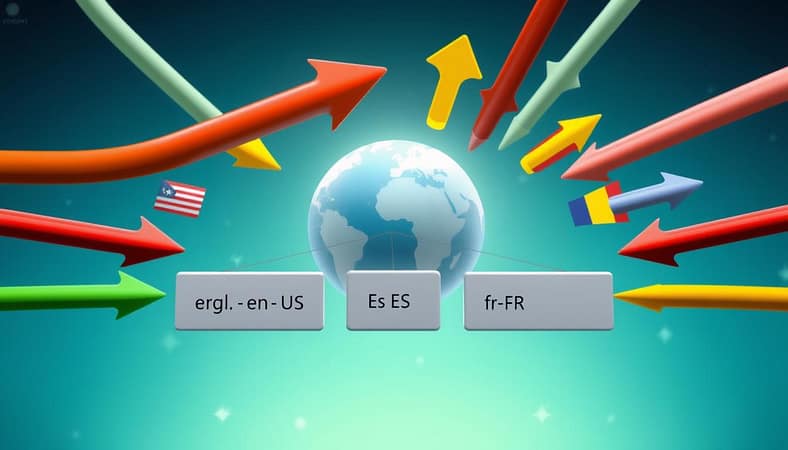
Hreflang is just the start. The real work is in how your site’s language versions link to each other. If your Spanish site only links back to English, you’ve created a digital dead end. You need links from Spanish to English, German, and Japanese versions of the same product.
This linking strategy helps distribute your domain authority. It lets your English pages support your newer Spanish or French versions. This way, you’re not managing isolated content but a connected network where link equity flows freely.
Here are some must-follow best practices:
- Bidirectional linking: Every language version should reference its counterparts. It’s a two-way street.
- Absolute URLs only: No relative paths. Be specific, like a proper street address.
- Set an x-default: This is your fallback option for users whose language you don’t target.
- Crawlable structure: Ensure search engines can actually follow these links between versions.
Implementing hreflang correctly does more than just optimize for search engines. It creates a seamless experience for users navigating your global content ecosystem. A user in Mexico can easily switch to Spanish, while someone in Argentina finds content for their region. This is not just good SEO; it’s good global citizenship.
Mastering hreflang and cross-linking changes how you approach multilingual search. You move from hoping Google figures it out to designing exactly how your content should be discovered. It’s the difference between shouting in multiple languages and having real conversations.
Localizing Content
Think of your website’s content like a suit. You can buy one off the rack—it technically fits, but it never looks quite right. That’s translation. Localization is the bespoke tailoring. It takes the same core fabric (your message) and recuts it for a different frame (your new market). This is the heart of sophisticated global SEO.
It’s the difference between “football” content in Texas and in Tottenham. One is about touchdowns; the other is about, well, feet. If you’re selling software, it’s knowing that “boot” in the U.S. starts a computer, while in the UK it’s what you put on before a muddy walk. These aren’t errors; they’re cultural cliffs you will drive right off.
True localization operates on multiple levels. The most obvious is language. But even here, nuance is king. A professional human translator catches the subtext—the humor, the idiom, the brand voice. Automated tools? They’re great for getting the gist of a menu. They’re terrible for conveying why your product is irresistible. As one expert analysis on SEO localization puts it, this is where brand soul meets market reality.
Then comes the visual and cultural layer. Imagery that works in Los Angeles might confuse or even offend in Riyadh. A promotional calendar built around American holidays is a silent admission you don’t care about your customers in Japan. You’re not just swapping flags; you’re swapping contexts.
Consider these practical adaptations that separate a localized site from a merely translated one:
- Currency & Measurements: Don’t make your customer do math. Show prices in yen, distances in kilometers, and clothing sizes in the local standard.
- Date & Time Formats: 04/07/2023 is April 7th in the U.S. and July 4th in much of Europe. Clarify time zones for events or support.
- Local References: Swap out metaphors. “Touchdown success” becomes “hat-trick performance.” Mention local festivals, not just global ones.
- Regulatory Compliance: Privacy laws, promotional rules, and product disclosures vary wildly. Legal accuracy is non-negotiable.
This process demands more than a plugin. It requires a strategy, often powered by a Translation Management System (TMS) to maintain consistency, but ultimately driven by human cultural insight. It’s the understanding that a “sale” banner triggers a shopping frenzy in New York but might require a more sober, value-focused explanation in Berlin.
In essence, localization asks a profound question: Does this feel like it was made for me? When the answer is yes, you’ve done more than optimize for a search engine. You’ve built a bridge. Your global SEO stops being a technical checklist and starts being a conversation. And that’s how you build a global brand, not just a global domain.
International Link Building
Your website’s backlink profile is like a passport. Each country needs its own visa. This is where international targeting becomes a real strategy.
Local backlinks are like character witnesses. A good review from Le Monde means more in Paris than a lot of links from The New York Times. Search engines see these as votes of confidence.

Why does this matter? A link from a .de domain tells Google’s German algorithm you’re local. It’s like having a local phone number. Without it, you’re just another tourist.
Building these connections needs more than Google Translate. You need real local engagement. Here’s how to earn your stripes in a new market:
- Collaborate with Local Influencers: Find voices that resonate in your target region. A tech review from a popular French YouTuber beats any corporate press release.
- Guest Blog on Regional Websites: Write for publications your audience actually reads. Not Harvard Business Review, but the industry blog that local professionals trust.
- Participate in Local Directories: Get listed where locals search. Think Yellow Pages equivalents, not just global aggregators.
- Earn Product Reviews: Encourage customers in your target country to share their experiences. Authentic local testimonials are pure gold.
Content marketing must speak the local dialect. A campaign that kills in Kansas might bomb in Kyoto. You need to understand what problems keep people awake at night in Berlin versus Boston.
| Approach | What It Signals | Effort Required | Impact Potentia |
|---|---|---|---|
| Local Influencer Partnership | Cultural relevance & trust | High (relationship building) | Very High |
| Generic Directory Submission | Basic local presence | Low (fill out form) | Low |
| Regional Guest Post | Subject matter authority | Medium (research & writing) | High |
| Local Customer Reviews | Product/service validation | Medium (customer outreach) | Medium-High |
Chasing .gov or .edu links in a country where you have no footprint is like trying to get backstage passes without knowing the band. It reeks of desperation. Instead, aim for contextual perfection.
One relevant link from a niche German automotive forum could outrank dozens of generic listings. It tells both algorithms and humans that you understand their specific world. This strategic international targeting through links builds actual authority, not just technical signals.
Remember: You’re not just building links. You’re building bridges. Each quality backlink from your target market is a plank in that structure. It connects your brand to local communities, search engines, and ultimately, customers.
For a deeper dive into crafting these cross-border connections, explore our complete guide to international link building strategies. The right approach turns foreign markets into home turf.
FAQ
Q: What is a multilingual search engine?
A: A multilingual search engine is a tool that allows users to search for information in multiple languages. It translates search queries and displays results in the user’s preferred language.
Q: How does a multilingual search engine work?
A: A multilingual search engine uses advanced algorithms to translate search queries and display results in the user’s preferred language. It takes into account the nuances of each language to provide accurate and relevant results.
Q: What are the benefits of using a multilingual search engine?
A: Using a multilingual search engine offers several benefits. It allows users to access information in their native language, improving their search experience. It also helps businesses reach a wider audience by providing content in multiple languages.
Q: How can I choose the best multilingual search engine?
A: When choosing a multilingual search engine, consider factors such as accuracy, user interface, and additional features. Look for a search engine that offers reliable translations and provides a seamless user experience.
Q: What are some popular multilingual search engines?
A: Some popular multilingual search engines include Google Translate, Bing Translator, and Yandex Translate. These search engines offer accurate translations and provide a wide range of language options.
Q: How can I optimize my website for multilingual search engines?
A: To optimize your website for multilingual search engines, ensure that your content is translated accurately and consistently. Use meta tags and header tags to improve search engine rankings. Also, consider using multilingual plugins or tools to enhance your website’s multilingual capabilities.
Q: What are the advantages of using a multilingual search engine?
A: Using a multilingual search engine offers several advantages. It allows users to access information in their native language, improving their search experience. It also helps businesses reach a wider audience by providing content in multiple languages.
Q: How can I choose the best multilingual search engine?
A: When choosing a multilingual search engine, consider factors such as accuracy, user interface, and additional features. Look for a search engine that offers reliable translations and provides a seamless user experience.
Q: What are some popular multilingual search engines?
A: Some popular multilingual search engines include Google Translate, Bing Translator, and Yandex Translate. These search engines offer accurate translations and provide a wide range of language options.
Q: How can I optimize my website for multilingual search engines?
A: To optimize your website for multilingual search engines, ensure that your content is translated accurately and consistently. Use meta tags and header tags to improve search engine rankings. Also, consider using multilingual plugins or tools to enhance your website’s multilingual capabilities.