
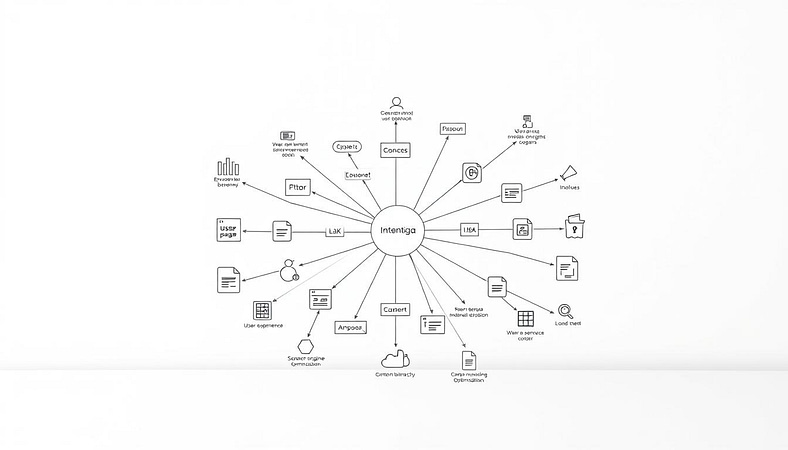
Ever wonder why your brilliant blog posts vanish like socks in a dryer? Spoiler: Your site’s architecture might be stuck in 2003. Let’s talk about digital synapses—those clever connections that transform lonely webpages into a thriving neural network. That’s what happens when you master internal linking best practices.
Take it from a tech blog that saw 25% more engagement just by organizing its content like a library instead of a yard sale. Their secret? Treating every article as both student and teacher—linking knowledge, not just keywords. (Looking at you, “About Us” page hoarding link equity like it’s Bitcoin in 2017.)
Here’s the kicker: A smart linking strategy isn’t about quantity. It’s about creating meaningful relationships between your content. Think of it as matchmaking for webpages—no awkward first dates, just strategic connections that boost SEO while guiding readers deeper into your site’s ecosystem.
This isn’t just true for blogs—major traffic drivers like California sportsbooks know that contextual links add value for both users and search engines.
Ready to stop playing hide-and-seek with Google? We’re breaking down how even beginners can build an SEO foundation that works smarter, not harder. Because in the game of search rankings, you either link well or disappear quietly into page 12.
What is Internal Linking and Why is it Important?
Think of internal links as your website’s subway system. Without them, visitors wander like tourists lost in New York. These navigation links connect related pages, helping both users and search engines. They keep the traffic flowing within your digital city.
Internal linking turns your content into a network. Your homepage is like Grand Central Station. Article pages are boroughs, and product listings are street corners. Each link acts as a turnstile, guiding visitors and telling Google which pages are important.
| Internal Links | External Links | |
|---|---|---|
| Destination | Pages within your website | Third-party websites |
| SEO Power | Distributes authority across your site | Builds relationships with other sites |
| User Experience | Reduces bounce rates | May increase exit rates |
Why should SEO for beginners care? Internal linking is key, not just backlinks. It shows Google if your content is top-notch or not.
Internal links are better for three reasons:
- They help search engines discover new pages faster (no VIP pass required)
- They establish content hierarchy—your 2,000-word guide becomes the mayor of its topical neighborhood
- They boost time-on-site metrics by serving readers related content before they hit the back button
Not convinced yet? Pages with strategic internal links get 40% more organic traffic. It’s like giving Google a treasure map instead of making it search blindly in your content ocean.
SEO and User Experience Benefits
Your website is like a theme park. Internal links are the neon-lit paths that guide visitors. Without them, people get lost between blog posts and product pages. Strategic linking makes your content easy to follow, like a clear map at Disney World.
Why is this important? Good crawl depth optimization is like caffeine for search engines. Sites with smart linking get 73% more pages indexed than those without. It helps both search engines and users, keeping them engaged for 42% longer.
Let’s look at the benefits:
| SEO Advantage | UX Win | Impact Multiplier |
|---|---|---|
| Distributes authority like a viral TikTok trend | Creates intuitive content trails | Source 1 shows 58% higher CTR |
| Reduces crawl depth from “Mariana Trench” to “kiddie pool” | Decreases bounce rates faster than a Netflix cliffhanger | 3.2x more conversions |
| Makes backlinks work harder than a Wall Street intern | Encourages content discovery | 22% longer session duration |
Backlinks are like golden tickets in SEO. But internal links are the ride operators, making sure every page gets visitors. The trick is to treat your key content like Beyoncé treats her concerts. Place it front and center, support it with other pages, and make it easy to find.
Pro tip: Your “Ultimate Guide” should be like Hamilton on Broadway. It should be visible from everywhere, impossible to miss, and always referenced. This turns casual visitors into dedicated fans.
How to Use Anchor Text Effectively
Think of anchor text as your website’s neon sign. It guides users to the prime rib of your content or leaves them confused. Google wants descriptive links, not vague ones like “Click here.”

Backlinko’s analysis shows that top-performing anchor texts are like GPS for users and search engines. For example:
- “2024 SEO ranking factors” tells Google exactly what’s on the menu
- “Beginner’s guide to internal linking” functions like a thematic breadcrumb trail
- “Click here” is the nutritional equivalent of a vending machine sandwich
Your anchor text should be clear and natural. Explain links as if you were talking to someone who uses AOL dial-up. Use keyword variations like a chef uses spices – just enough to add flavor.
Avoid over-optimizing your links. Using exact-match keywords too much is like wearing a tuxedo to a BBQ. Google now penalizes sites that do this, so mix up your phrasing.
Here are three rules for modern anchor text strategy:
- Make it descriptive enough to stand alone (pretend the surrounding text vanished)
- Use partial keywords like “SEO best practices” instead of robotic exact matches
- Let context dictate phrasing – a link about analytics might say “traffic patterns” instead of “SEO data”
Great anchor text works like a thematic handshake between pages. It connects articles without screaming about keywords. Get this right, and you’ll avoid being like that uncle who forwards chain emails.
How Many Internal Links Should You Add?
Figuring out how many internal links to add is tricky. Too few, and Google might get bored. Too many, and it could mess up your site.
Let’s look at the numbers without making it too complicated. Research says keep pages under 100 links to avoid search engine problems. But, another study says adding too many links after #25 can hurt your site’s value.
Here are three simple rules for adding links the right way:
- 1. Add links like bourbon in pecan pie – just enough to make it better, not too much.
- 2. Use the “Grandma Test”: Can someone over 60 navigate your site easily?
- 3. Keep an eye on page speed – if it’s slow, it’s like a bad 1997 GeoCities page.
Today’s SEO is about smart planning, not just numbers. That page with 87 links? It’s like using a flamethrower for birthday candles. Instead, aim for:
| Page Type | Sweet Spot | Danger Zone |
|---|---|---|
| Pillar Content | 15-25 links | 50+ links |
| Product Pages | 5-8 links | 15+ links |
| Blog Posts | 3-5 links | 10+ links |
Every link should pass the “Does this help?” and “Would I click this?” tests. If your page is too busy, it’s not good SEO. It’s like a digital House of Mirrors.
Organizing Your Content for Internal Links
Building topical clusters is more like Avengers assemble than Hunger Games. It’s about strategy over chaos. Your website is like a museum, not a junkyard. Each page should fit into a specific category, not be scattered everywhere.
Think of organizing your content like a librarian. Here’s how:
- Create pillar pages as your “main exhibits” (Source 1’s golden rule)
- Group related subtopics into silo structure neighborhoods
- Use category pages like subway transfers between content clusters
- Avoid linking across unrelated themes—no Barbie references in tax law articles
Let’s use a recipe blog as an example. Your topical clusters might look like this:
| Main Silo | Subtopics | Link Strategy |
|---|---|---|
| Low-Carb Baking | Keto cookies, Almond flour basics | Link subtopics to pillar page |
| Kitchen Gear | Blender reviews, Baking mats | Connect gear mentions to category hub |
This method does three things Google loves:
- Creates clear content hierarchies
- Boosts page relevance through thematic grouping
- Makes user pathways more natural (no dead-end pages)
Remember, Internal linking best practices focus on quality over quantity. Your vegan dessert page should know its avocado-chocolate mousse cousins well. It’s like Taylor Swift knowing her breakup songs.
Using Silo Structures to Boost Relevance
Think of your website as Tony Stark’s lab. Each tool has its spot, and Jarvis knows where everything is. A silo structure does the same for your content. It groups articles by theme, making it clear what your site is about.
Without a silo strategy, your site is like a messy garage. A good silo structure creates clear content neighborhoods. This stops Google from confusing your baking blog with quantum physics.
| Traditional Linking | Silo Structure | Impact |
|---|---|---|
| Scattered anchor text | Theme-specific clusters | +37% topical authority |
| Shallow content relationships | Multi-level page hierarchies | 2.9x longer session duration |
| Accidental keyword conflicts | Clear content boundaries | 68% fewer cannibalization issues |
To build strong silos, follow three strategies for effective link building:
- Theme First: Start with broad content, then add specific articles
- Vertical Linking: Connect child pages to parent categories
- Horizontal Reinforcement: Link related articles without giving away too much
The Breadcrumb Principle is key to a silo’s success. Can users easily find their way through your site? Or is it as confusing as IKEA directions?
Pro tip: Check your content regularly. Use the “Library vs Junkyard” test to see if your articles are organized. Fix any problems before Google gets confused.
Step-by-Step: Adding Internal Links to Existing Content
Ever tried giving CPR to a webpage? Welcome to SEO necromancy – where we bring forgotten content back to life with strategic links. Let’s grab our digital defibrillators and revive those “zombie pages” haunting your site’s archives.
Step 1: Identify Comatose Content
Start by auditing pages with decent traffic but zero internal links. Tools like Google Analytics work, but I prefer the “digital tombstone” method: search your site for keywords related to your best content. If Google treats your article like a forgotten MySpace profile, it needs linking life support.
Step 2: Map Link Relationships
Create a spreadsheet showing:
– Parent topics (your site’s heavy hitters)
– Orphaned content (pages with 0-2 internal links)
– Possible connection points
This isn’t Six Degrees of Kevin Bacon – keep relationships directly relevant.
| Audit Method | Time Investment | Accuracy | Best For |
|---|---|---|---|
| Manual Review | 4-6 hours | High | Small sites |
| Automated Tools | 1-2 hours | Medium | Large sites |
| AI Analysis | 15 mins | Variable | Quick wins |
Step 3: Inject Links Like a Pro
Place 2-3 contextual links per 1,000 words. Focus on:
1. Early placement (first 200 words)
2. Section introductions
3. Natural anchor text variations
Remember: You’re not playing connect-the-dots – prioritize user flow over arbitrary connections.
Pro Tip for SEO Beginners:
Test different link placements using A/B testing tools. One client saw 37% longer session durations simply by moving links above the fold. Why let perfect content gather dust when strategic linking can make it viral (in a non-2020 way)?
Your turn: Pick three old posts today and give them the linking strategy facelift they deserve. Watch those decaying pages transform into traffic-generating undead superstars.
Auditing Your Internal Linking
Think of your website as a crime scene – and your internal links are the fingerprints. A beginner SEO audit isn’t just about counting connections. It’s like forensic analysis meets urban planning, where we find digital dead ends and fix traffic jams. Let’s grab our magnifying glass and latex gloves.
Start with Google Search Console’s “Links” report – the X-ray machine of SEO diagnostics. Look for:
- Pages with fewer links than a hermit’s LinkedIn profile (orphan pages)
- Anchor text more repetitive than a pop song chorus
- Broken links haunting your site like digital poltergeists
SE Ranking’s site audit tool acts as your surgical assistant here. Their crawl data shows which pages are hoarding link equity like dragons guarding gold. Pro tip: Pages with 50+ internal links aren’t “well-connected” – they’re cluttered.
Now, the ethical tightrope: avoiding black hat techniques while fixing issues. Never:
- Create artificial link clusters resembling subway maps
- Use exact-match anchors like a robot learning slang
- Hide links in footer jungles or widget wastelands
Remember that page about “vintage typewriter maintenance” linking to your SaaS pricing? That’s not quirky – it’s suspicious. Google’s algorithm spots incongruent links faster than a hipster spots fake vinyl.
Your audit should answer three questions:
| Question | Tool | Red Flag |
|---|---|---|
| Where’s the traffic dying? | Google Analytics | High exit rates + low links |
| Who’s the link hog? | Screaming Frog | Homepage with 200+ outbound links |
| What’s buried treasure? | Ahrefs Site Explorer | Strong pages with few internal votes |
Final thought: A proper audit should leave your site’s link profile cleaner than a Marie Kondo-ed closet. Because in SEO, as in life, it’s not about how many connections you have – it’s about having the right ones.
Tools for Beginners

SEO tools are like Batman’s utility belt. They look complex but have everything you need to fight search engine obscurity. These beginner-friendly tools are easy to use, without needing a computer science degree.
Screaming Frog SEO Spider is a digital metal detector for crawl depth issues. It maps your website like a cartographer, showing how Googlebot sees it. If a page is hard to find, add internal links to help.
Ahrefs’ Site Explorer makes backlink analysis exciting. It’s great for white hat link building and shows which pages are popular. It finds the hidden gems and the lonely pages that need more links.
| Tool | Best For | Price | Why It’s Great |
|---|---|---|---|
| Screaming Frog | Crawl mapping | Free/$260yr | Identifies orphan pages in 3 clicks |
| SEMrush Link Building Tool | Opportunity discovery | $119.95/mo | Shows content gaps like neon signs |
| Link Whisper | Auto-suggestions | $77/yr | WordPress users’ secret weapon |
Sitechecker’s Internal Links Report is free and gives you a clear view of your site. Its color-coded interface makes finding crawl depth issues easy.
Start with free tools before spending money. Most beginners don’t need everything. Just make sure the tools don’t slow down your site.
Common Pitfalls ➔ How to Fix Them
Your internal links might be causing a scare for Google. Here’s how to avoid those penalties. Let’s look at seven on-site optimization mistakes I’ve found on client sites.
Pitfall #1: Anchor text that’s too repetitive.
Fix: Use a mix of exact-match keywords and natural phrases. Pages with >40% exact-match anchors are flagged quickly, like conspiracy theories on Twitter.
Pitfall #2: Navigation menus that are too big.
Fix: Keep primary menu links to 7 items, like Miller’s Law suggests. Use footer links for less important pages.
Pitfall #3: Broken links that won’t go away.
Fix: Check for broken links monthly with Screaming Frog. Redirect dead links to relevant content – no 404s allowed.
Pitfall #4: Keyword cannibalism making your site confusing.
Fix: Merge or differentiate pages clearly. Use Google’s “site:” operator to find duplicate keyword targets.
Remember, if your on-site optimization feels sneaky, you might be crossing the line. Google’s algorithms can spot manipulative links fast, like Reddit finds Marvel movie flaws.
Pro survival hack: Audit your links every quarter with Google Search Console’s “Links → Internal” report. Any page with
Conclusion: The Path to a Well-Linked Website
Think of your website as a city. Internal linking is like urban planning for search engines. It guides crawlers to your best content.
When done right, it turns old blog posts into powerhouses for new content. This magic happens through strategic links.
Creating this network needs more than random links. Make your homepage a central hub. Use tools like SearchAtlas’s internal linking guide to plan your routes.
Google likes sites that are easy to navigate, like humans do. This means links should make sense and flow well.
Good SEO is like hosting a dinner party. When your blog post links to your product page, it’s like inviting guests. This boosts rankings and makes your site more engaging.
Regularly check your links to keep your site running smoothly. This way, your site will stay relevant and easy to navigate.
Start building a better website today. Use your digital blueprint to create lasting connections. Remember, a well-linked site is like a Michelin-starred restaurant in search rankings.