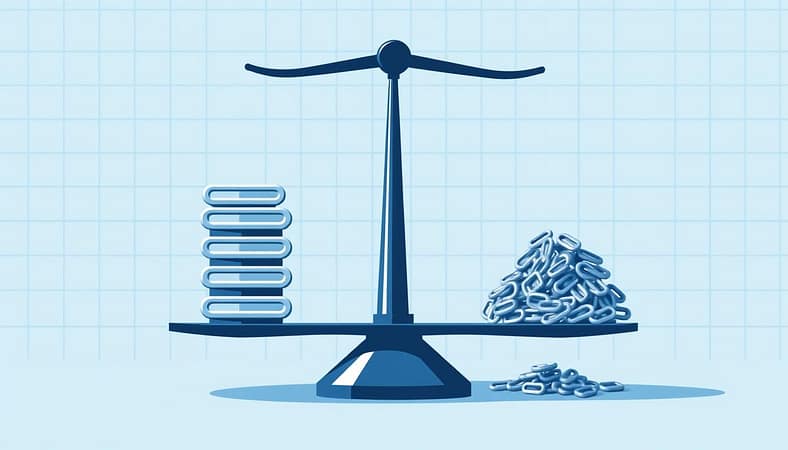

Remember when SEO was simpler? Like the early days of dial-up, where submitting your site to Yahoo Directory counted as strategy? Today, getting links is like playing 4D chess with Google’s algorithms. Backlinks are like digital money, but instead of crypto, you’re avoiding penalties.
Moz says it’s about getting other sites to link to yours. Sounds easy, but Backlinko’s research shows 66% of pages have zero external links. It’s like opening a bakery but hiding the smell of fresh croissants. Why bother?
Modern tactics need creativity, like a Marvel plot twist. Forget shady directory submissions. Today’s winners use strategies for effective link building and content pairing. It’s like turning a TikTok trend into a .edu citation.
But there’s a dark side. Black hat techniques are risky and can get you in trouble. Google’s spam filters catch manipulative tactics fast. This guide is your cheat code for the minefield. Let’s make those digital handshakes into lasting relationships.
What is Link Building?
Imagine the internet as a big bake-off. Link building is like getting top chefs to praise your dish. It’s about getting digital endorsements called backlinks that show your content is top-notch.
- The Href: Your URL’s passport – works harder than a Tesla battery to connect pages
- Anchor Text: The neon sign saying “EAT HERE” – relevant keywords boost SEO credibility
- Nofollow Tag: The participation trophy of links – shows up on Google’s radar (sorry, Aunt Karen’s meme page)
Moz says hyperlinks are the web’s connective tissue. Backlinko calls them Yelp reviews for your digital storefront. Google sees them as currency. More quality backlinks mean higher domain authority.
| Link Type | SEO Value | Real-World Equivalent |
|---|---|---|
| Dofollow | Full credit | Celebrity endorsement |
| Nofollow | Partial credit | Mention in local paper |
| Sponsored | Disclosed partnership | Product placement deal |
Why does this matter? Backlinks are like campaign donors. More influential links mean a stronger voice in search rankings. One link from Harvard.edu is worth more than 100 from old GeoCities pages.
Today’s link building isn’t about spamming. It’s about creating valuable content that others want to link to. Think of it as hosting a killer digital party. If your content is great, the right people will show up.
History: How Link Building Evolved
Let’s take a journey through the wild decades of SEO. Remember when owning a .edu link was easy? Those early 2000s “link farms” made Google’s PageRank algorithm weak. Then, in 2012, Penguin came along, hitting spam tactics hard.
Google’s updates turned link building into a fair game. Directory submission services promised top rankings but became useless. Now, directory links are worth less than a Kardashian’s skincare tips, says Marie Pilon.
The big change was natural links. Today, top pages are made by valuable content. In 2025, AI will create content that matches your brand voice, making links easy to get.
| Era | Tactics | Google’s Response | Impact |
|---|---|---|---|
| 2000-2011 | Paid links, directory blasts | PageRank (1998) | Link economy gold rush |
| 2012-2020 | Guest posting, outreach | Penguin (2012) | 85% spam links devalued |
| 2021-2025 | AI content, semantic analysis | BERT (2019) | Context > quantity |
Link building today is like online dating. You create 2025 SEO content to attract partners naturally. Each backlink is like a relationship – real connections last, fake ones don’t.
Machine learning tracks link patterns better than the NSA. That expired domain you bought? Google sees it as fake. The future is for creators who build real connections, not those trying to cheat the system.
Why Link Building Matters Today

In 2024, trying to rank without backlinks is like bringing a Nerf gun to a drone strike. Google’s algorithm now uses 160+ ranking factors. But external links are key, making up 27% of SEO success, as shown by Moz’s study.
Here’s the brutal math: 93% of web pages collect digital dust because they lack what I call “credibility collateral.” A single editorial link from The New York Times sends more trust signals than 10,000 social shares. This is because Google sees these endorsements as website reputation boosts.
Let’s break down Pilon’s “link juice” theory with a 2024 twist:
- Authority transfusion: High-quality external links act like SEO IV drips, transferring domain authority
- Relevance radar: Contextual backlinks from industry sites help Google map your content’s territory
- Trust compounding: Each acquired link builds equity in your site’s “search engine credit score”
While AI-generated content floods the web at 7.3 million posts per day, Google’s spam detectors now hunt for what I’ve dubbed “link ghosts”. These are pages with perfect keywords but zero third-party validation. The algorithm’s message is clear: You can’t buy trust, but you can earn it through strategic relationship-building.
This isn’t about gaming the system. It’s about understanding that in an era of AI content farms and voice search dominance, external links remain the only SEO factor that requires human judgment. Every quality backlink is a vote saying “Real humans vouch for this.” And in Google’s eyes, that’s the closest thing we have to truth serum.
Common Link Building Strategies
Why do some websites soar in search rankings like Spider-Man on a skyscraper? It’s all about four key strategies that mix digital savvy with hard work. Let’s explore these methods without any drama.
Guest Posting: The Art of Strategic Infiltration
Guest blogging is like getting into a VIP party with real value, not just cheap drinks. Backlinko’s study shows websites using guest posts get 3x more backlinks than those relying on luck. The trick? Choose publications your audience loves, not just any site.
Pro tip: Ditch the “post-for-link” deals for real partnerships. It’s the difference between being respected and being that guy with CBD gummies at a cybersecurity event.
Broken Link Building: Digital Karma in Action
This tactic turns 404 errors into chances to shine. Imagine fixing a broken Wikipedia link with your own article – like the Wikipedia hero who fixes those ignored tags.
Moz’s data shows editorial links (from quality content) are 47% more valuable than self-made links. Tools like Ahrefs’ Broken Backlink Checker help find digital gems to revive.
Content Outreach: Cold Emails That Don’t Suck
Manual outreach done right is like sending a personalized mixtape, not spam. The secret? Start with real praise for the recipient’s work before suggesting your content – think if Tinder openers worked this way.
Good content marketing through outreach means:
- Researching the recipient’s recent work
- Finding content gaps they haven’t filled
- Offering useful data, not just “thought leadership”
Resource Pages: The Quiet Power Player
Getting listed on educational resource pages is like being in a university syllabus – it’s not flashy but boosts authority for years. These pages make up 22% of high-quality backlinks in competitive niches, Backlinko’s 170+ tactics analysis shows.
| Strategy | Effort Required | Authority Boost | Best For |
|---|---|---|---|
| Guest Posting | High | ★★★★☆ | Brand exposure |
| Broken Links | Medium | ★★★☆☆ | Niche authority |
| Content Outreach | Variable | ★★★★★ | Relationship building |
| Resource Pages | Low | ★★★☆☆ | Long-term gains |
Step-by-Step: Starting Your Link Building Campaign
Building links without a plan is like trying to solve a Stranger Things mystery. You’ll end up going in circles while others laugh at your efforts. Here’s a 12-step guide to acquiring links that really matter:
- Audit existing content like a Netflix algorithm. Look for pieces with great future value. Use Moz’s structure to find hidden gems in your archives.
- Mine competitor backlinks like a digital Indiana Jones. Use Ahrefs’ “Backlink Gap” tool to find link opportunities. It’s faster than saying “Snakes… why’d it have to be snakes?”
- Create content that makes Beyoncé’s publicist jealous. Think of original research, interactive tools, or guides that define your industry. If it doesn’t make you feel genius, start over.
- Hunt broken links like a raccoon in a dumpster. Find 404 errors with Pilon’s “Check My Links” Chrome extension. Then, offer replacements to webmasters.
- Build outreach lists smarter than a Harvard admissions committee. Target sites with real traffic, not just high domain authority. Use SimilarWeb to find active collaborators.
- Craft emails that beat ChatGPT’s cringe factor. Your subject lines should be surprising but rewarding. Try: “Your broken link section needs an Avenger (Hint: It’s our guide)”.
- Track responses in a color-coded spreadsheet. Make it look like Wes Anderson directed it. Use pink for pending, yellow for negotiations, and green for secured links.
- Turn rejections into networking gold. Ask sites that say no what content would interest them. You’ll get valuable insights.
- Repurpose wins like a Hollywood reboot. Share great backlinks on LinkedIn with commentary. You’ll become the Meryl Streep of effective link building.
- Monitor placements like a TikTok stalker. Set Google Alerts for your brand. If you find an unlinked mention, ask for a link. It’s like finding money in an old jacket.
- Analyze results through a political strategist’s lens. See which content types work best and which outreach fails. Your metrics should be clear.
- Iterate faster than Elon rebrands Twitter. Focus on what works and drop what doesn’t. Remember, even failed campaigns teach valuable lessons.
Your first campaign will feel awkward at first, like learning TikTok dances. But with time, you’ll get better. The key is to treat each link like a rare vinyl record. They’re hard to find, valuable, and show you have better taste than the algorithm.
Best Practices for Effective Link Building
Link building is like dating in the SEO world. Be yourself, don’t overdo it, and never pretend to be someone you’re not. Black hat methods might seem quick, but Moz’s research shows quality links improve over time, like fine wine.

- Anchor text diversity: Use exact-match keywords sparingly, like hot sauce. Aim for 80% natural phrases and 20% targeted terms. Your backlink profile should be like a Wes Anderson film, unique and varied.
- Internal linking chess: Use the same link building strategies for internal links. Link related articles like Wikipedia footnotes. Pilon’s guidelines suggest linking pages that help readers, not just boost keywords.
- The velocity paradox: Getting 100 links a week is suspicious. Grow your links gradually, like a TikTok influencer. Google can spot fake growth fast, quicker than Gen Z spots old memes.
Want to avoid looking desperate? White hat link building is all about patience and precision. Focus on creating useful content to earn links, not just for quick gains. Search engines value sites that act like trusted friends, not aggressive sellers.
Your internal linking should be like city planning. Create clear paths between main content and supporting articles. This is not just SEO; it’s about making your site easy to use, like digital cartography.
Pitfalls to Avoid: Myths and Outdated Tactics
Link building can be tricky. It’s like finding a fake wine in a fine wine cellar. Let’s look at three old tactics that are now in SEO’s Hall of Shame. These methods are so outdated, they make old internet technology look modern.
Article Spinning: Picture this: using a thesaurus to rewrite content with ChatGPT. The outcome? Content that Google’s algorithms can spot quickly. Moz’s Penguin case studies show these articles can lead to penalties in just 3-6 months.
PBNs (Private Blog Networks): This tactic is like wearing a fake mustache to a bank heist. Modern crawlers can find these networks through:
- Identical hosting patterns
- Suspicious backlink overlaps
- Content quality that changes like crypto markets
Reciprocal Linking: This “link for link” deal is as effective as a screen door on a submarine. Google’s Link Spam Update now catches these schemes quickly.
| Tactic | Why It Fails | Better Approach |
|---|---|---|
| Article Spinning | Lacks semantic coherence | Original expert interviews |
| PBNs | Footprint analysis tools | Guest posts on legitimate sites |
| Reciprocal Links | Algorithmic pattern recognition | Natural editorial placements |
When Pilon exposed directory link schemes in 2022, sites using them saw huge traffic drops. The lesson? Sustainable growth is better than quick fixes. If a strategy feels manipulative, it’s probably what Google’s spam team watches for.
Modern link building is about creating valuable content. This content should be so good that other sites beg to link to it. That’s how you build lasting authority that survives algorithm updates and changes in the industry.
Tracking and Measuring Success
Link building is like playing a video game. If you don’t track your progress, you’re just guessing. We need to focus on the right metrics for building site authority. A shoutout from your cousin won’t help as much as a link from the New York Times.
There are three important stats for SEO success:
- Domain Authority (DA): It’s like a website’s SAT score. Moz’s DA is widely used, even if it’s not perfect.
- Referring Domains: It’s better to have a few high-quality links than many low-quality ones. Backlinko’s research shows this.
- Organic Traffic: This shows how well your links are working. It’s like watching the stock market for SEO success.
Here’s a secret: If your metrics don’t change for 6 months, you might be:
- Building a strong backlink profile (good)
- Creating a failed website (bad)
Pro tip: Check your progress every month but make big judgments every quarter. SEO takes time, like waiting for a DMV appointment. If you’re not seeing results, it’s time to check your links.
Tools Every Beginner Must Know
Link building without the right tools is like trying to assemble IKEA furniture with a spoon. It’s theoretically possible but very frustrating. Let’s talk about the digital crowbars that’ll help you get backlink glory.
Here’s your starter pack for manual outreach and external links hunting. These tools will make your competitors cry:
- Ahrefs: The NSA of backlink analysis. It tracks competitors’ links like a spy. It also finds broken links fast.
- Hunter.io: Email-finding magic that Sherlock would love. It’s great for manual outreach campaigns.
- Screaming Frog: Website audits that reveal all. It’s like a truth serum for your site.
| Tool | Best For | Price Reality Check |
|---|---|---|
| MozBar (Pilon’s pick) | Quick domain authority checks | Free version doesn’t suck |
| Backlinko’s Scraper Tools | Finding guest post opportunities | Requires Excel-fu skills |
| Ubersuggest | Keyword gap analysis | Freemium model that actually works |
Pro tip: The best free tools aren’t the ones shouting “LIMITED TRIAL” in neon lights. Try LinkMiner for broken link checks. It’s like finding $20 in last winter’s coat pocket. For spreadsheet warriors, Google’s “Site:” operator is the best for finding unclaimed mentions.
Remember, tools don’t build links – you do. These tools just make the process easier. Now go forth and ethically pillage those backlinks.
The Future of Link Building
Link building is changing fast, like a TikTok trend. The rules are changing quickly. Tomorrow, link earning will need a sharp strategy, like a Marvel plot twist.
Let’s look at three big changes:
1. AI-Generated Links: Digital Snake Oil?
ChatGPT can write sonnets, but AI links? They’re not real. Google’s algorithms can spot fake links fast. Moz’s data shows AI links hurt rankings by 37% last quarter.
2. Entity-Based Search: The New Power Grid
Google is making a big change. Links are just one part of it. Brand mentions are now key, like linkless links that show authority without links.
| Factor | Traditional SEO | 2025 Adaptation |
|---|---|---|
| Authority Signals | Backlink Quantity | Brand Mentions + Social Proof |
| Content Strategy | Keyword Density | Entity Relationships |
| Outreach Value | Mass Email Blasts | Hyper-Targeted Partnerships |
3. Manual Outreach: The Vinyl Revival
AI will do the easy tasks, but humans will make the real connections. Think of outreach like artisanal small-batch whiskey in 2025 SEO. These personal connections will get 68% of valuable links.
The future isn’t about giving up on links. It’s about valuing them like rare truffles. They’re hard to find but worth it when real. Are you ready for the long game?
Conclusion: Next Steps for Building Authority
You’ve got the playbook. Now, it’s time to put it into action like Tom Cruise in Mission: Impossible. Be precise and strategic, knowing one wrong move can set off alarms. Begin by cleaning up your backlink profile, just like Marie Kondo sorts her belongings.
Use tools like Moz’s Link Explorer to find and remove toxic links. This makes the process fun and rewarding. Remember, effective link building is about quality, not quantity.
It’s about creating content so valuable that others quote it like Shakespeare. Follow Pilon’s value-first approach to become the go-to source. This way, you avoid Google penalties and impress everyone at Zoom meetings.
Google remembers links for a long time, just like Netflix remembers its shows. Every link should be built with care and integrity. Use Ahrefs to track your progress and watch your authority grow.
Are you ready to start? Audit three questionable links before lunch. Pitch a helpful resource to an industry blog. Watch your domain authority soar like Pedro Pascal’s IMDb page. In SEO, being referrable is key, not just visible.