
The digital marketplace knows no borders. To truly compete, your website must speak to audiences worldwide in a way they understand and trust.
This isn’t just about translation. It’s a strategic process of optimization for different languages and regions. We call this International SEO.
A full 76% of online consumers prefer to buy from sites in their native language. Even more striking, 40% will refuse to make a purchase if the information isn’t presented in their language.
Ignoring these preferences means leaving massive opportunity on the table. A proper multilingual strategy moves far beyond word-for-word conversion.
It involves deep localization. This means adapting your site’s technical framework, content, and cultural nuances for each target market.
The rewards are significant. You gain an improved user experience, which leads to lower bounce rates and more time spent on your site. You also unlock expanded keyword targeting and achieve much greater visibility in local search results.
For any business aiming to expand its global footprint, mastering this localization process is no longer optional. It’s the foundation for meaningful engagement and growth across borders.
Choosing the Right Domains and URLs
Geo-targeting starts with your domain name. Choosing the right Top-Level Domains (TLDs) is key. Your URL tells search engines where your content is for. Pick well, and you’re set for global visibility. Pick poorly, and you might confuse search results and weaken your SEO.
There are three main ways to set up a global website. Each sends different signals to Google and users. Each affects technical management and how your brand is seen.
Country Code Top-Level Domains (ccTLDs) are tied to specific countries, like .de for Germany or .co.uk for the UK. Google sees a ccTLD as a very strong signal for a country. This clear signal is a big SEO plus.
Global Top-Level Domains (gTLDs) like .com or .org can show regional targeting with subdomains or subdirectories. A subdomain is like de.example.com (for Germany). A subdirectory is example.com/de/. These setups are flexible but need clear signals to search engines.
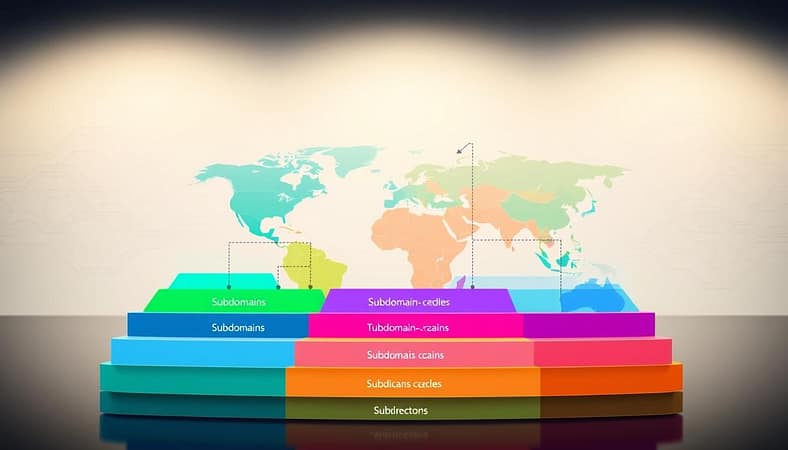
The table below compares these three URL structures. It helps you decide based on your business needs.
| Structure Type | Geo-targeting Signal | SEO Equity Transfer | Technical Complexity | Ideal For |
|---|---|---|---|---|
| ccTLD (e.g., example.de) | Very Strong. Google’s default signal for a country. | None between domains. Each site stands alone. | High. Requires separate hosting, SSL, and maintenance. | Businesses with strong, independent country-specific brands and resources. |
| gTLD with Subdomain (e.g., de.example.com) | Moderate. Requires clear hreflang and other signals. | Partial. Some link equity may pass to the root domain. | Medium. Shared infrastructure but separate technical footprints. | Large sites with very distinct regional content or technical needs. |
| gTLD with Subdirectory (e.g., example.com/de/) | Moderate. Relies on hreflang, sitemaps, and other cues. | Strong. All link equity consolidates to the main domain. | Low. Single site to host, secure, and manage. | Most businesses starting international expansion, seeking efficiency. |
Google says use locale-specific URLs for clear geotargeting. While ccTLDs are the clearest signal, subdomains and subdirectories work too when used right with hreflang tags and Search Console targeting.
Your choice depends on your target market, resources, and brand strategy. Are you focusing on one or two countries with a big budget? A ccTLD might be the best choice. Or are you exploring multiple markets with a single team? A subdirectory structure could be more practical how to choose a website setup for international.
For those with limited technical resources, a gTLD with subdirectories is often suggested. It’s good for SEO equity transfer, simplifies analytics, and is easier to keep up. But, established brands with country-specific needs might prefer the strong presence of ccTLDs.
Remember, your domain structure is a long-term choice. Changing it later is complex and risky for SEO. Think about your goals, consider the table’s points, and pick a foundation that grows with your global plans.
Language and Regional Targeting with hreflang
Imagine a user in Spain searching in Spanish but landing on your English page for the UK. This mismatch hurts their experience and your rankings. The solution is a precise technical signal called the hreflang attribute.
hreflang acts as a translator and guide for search engines. It tells Google, “This page is in French for visitors in France,” or “This is the Spanish version for Mexico.” You use a language code, like ‘es’ for Spanish. You can add an optional region code, like ‘es-MX’ for Mexican Spanish or ‘en-GB’ for British English.
This targeting is key. It ensures users get the right content in their language. It also stops search engines from seeing your Spanish and French pages as duplicate content. Google clearly recommends using hreflang annotations for this purpose.
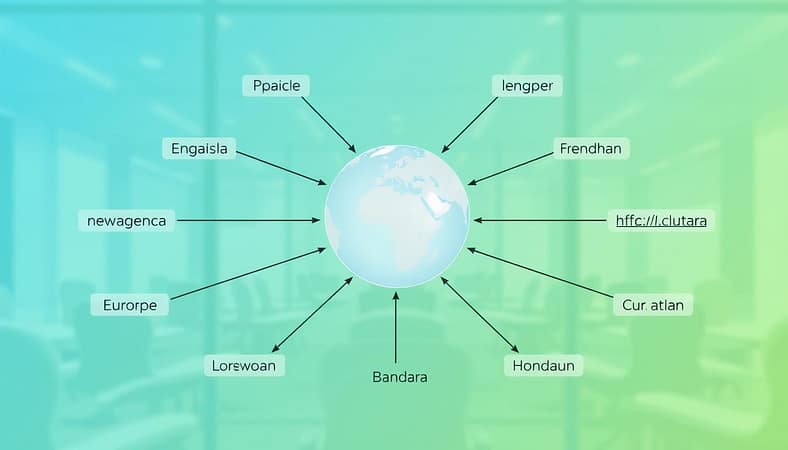
You have three main ways to implement these tags. Each method sends the same signal but works best in different technical situations.
| Implementation Method | Ease of Use | Best For | Key Consideration |
|---|---|---|---|
| HTML Link Elements | Moderate | Most websites, easier for small page sets | Tags go in the section of each page. Can increase page size. |
| HTTP Headers | Advanced | PDFs or non-HTML files | Configured at the server level. Invisible in page HTML. |
| XML Sitemap | Efficient | Large sites, centralizes management | Easiest to maintain at scale. Requires a valid sitemap. |
The most critical rule is reciprocity. If Page A links to Page B using hreflang, Page B must link back to Page A. Missing this reciprocal link is a common error that can make the tags ineffective.
When set up correctly, hreflang creates a clear map for search engines. It directs traffic efficiently, boosts user satisfaction, and strengthens your global rankings. It’s a foundational piece of any serious international SEO strategy.
Adapting Content for Cultural Nuance
Localization is more than just translating words. It’s about building trust worldwide. It’s the bridge between global visibility and local acceptance.
True cultural adaptation goes deep into local idioms, values, and trends. For example, a sustainability campaign might hit differently in Germany than elsewhere. You need to think about local currencies, units, and images that show your audience’s life.
Start with internationalization. Design your content and website to adapt easily. Use neutral images and avoid specific idioms. This makes localization easier and cheaper.
Not all content needs the same effort. Use a tiered strategy to match content value with resources. This saves money and boosts results.
| Content Tier | Description & Examples | Recommended Approach |
|---|---|---|
| Low-Visibility / Informational | Internal documentation, FAQ pages, basic product specs. | Machine translation is often sufficient for basic understanding. |
| Mid-Level / Transactional | Category pages, service descriptions, blog posts. | Machine Translation Post-Editing (MTPE). A human editor refines the AI output for clarity and grammar. |
| High-Value / Promotional | Homepage copy, marketing campaigns, brand slogans, ad copy. | Full human translation or transcreation. Experts rewrite the message to evoke the same emotion and intent in the new culture. |
Imagine a global drink company launching a new product. A direct translation might confuse people. Transcreation creates a phrase that fits local slang, making the brand feel at home.
Investing in cultural adaptation pays off. It builds trust, lowers bounce rates, and boosts sales. When people feel understood, they’re more likely to engage and buy.
Effective localization turns your global site into a local experience. It’s the key to connecting with every market you enter.
Technical Considerations for Global Sites
Search engines need more than just hreflang tags to know where to send your pages. A strong geo-targeting plan uses clear technical signs. These signs show your site’s intended market without doubt.
Hreflang tags are key, but search engines also look at other factors. These help confirm your site’s location and who you’re trying to reach.
- Server Location (IP Address): Hosting on a server in your target country is a strong sign. It makes pages load faster for locals and shows regional relevance.
- Local Contact Information: Showing a local address and phone number with the right country code is a trust signal. It proves you’re really there.
- Local Language & Currency: Use the local language for all content, including meta descriptions and legal text. Prices in the local currency are also important for e-commerce sites.
- Local Backlink Profile: Links from reputable sites in your target country boost your local authority. They show you’re relevant to that market.
A big warning: Google says don’t use IP analysis or automatic redirects based on language or location. This can stop search engines from crawling all your site versions. It also makes it hard for users to find the version they want.
Managing Duplicate Content with Canonical Tags
When you have the same content in different languages or regions, you face duplicate content issues. The rel="canonical" tag and the hreflang tag help manage this.
Use canonical tags to point to the preferred version of a page within the same language. For example, if you have U.S. and UK English pages, you might canonicalize one to the other. Hreflang is used for pages in different languages, telling search engines they’re the same content for different audiences.
Understanding Domain Strategy (gTLDs vs. ccTLDs)
Your domain extension choice is a big signal. Country-code Top-Level Domains (ccTLDs) like .de or .jp are geo-targeted to their countries. Generic Top-Level Domains (gTLDs) like .com or .org are seen as generic by Google.
You can geo-target a gTLD subdirectory or subdomain (like example.com/fr/ or fr.example.com) in Google Search Console. This offers flexibility while signaling your target region. For more on domain strategy and international SEO, check out this guide to international SEO.
By carefully implementing these technical considerations, you create a clear and trustworthy signal profile. This tells search engines exactly who your content is for, boosting your visibility in your target markets.
Tools for Monitoring International SEO
Your global SEO strategy needs constant measurement. Making technical and content changes is just the start. You must track performance in every target market. A strong toolkit for International SEO is essential.
Platforms like Semrush and Ahrefs are key. They track keyword rankings on Google domains like google.co.uk or google.de. Remember, local search engines are big in some areas. Tools for Baidu in China or Yandex in Russia are a must for a full view.
Keyword research never stops in global markets. Use Google Keyword Planner for search volume data by location. Google Trends shows seasonal interest shifts by country. These insights help you adjust your content calendar.
Do regular technical audits on each language version of your site. Check for crawl errors, site speed, and hreflang implementation. Also, watch your local backlink profile to understand regional authority signals.
Analytics segmentation gives the last insight. Use Google Analytics 4 to filter data by country and language. See which regions drive the most conversions or engagement. This data shows the return on investment for your International SEO work.
The right tools turn guesswork into a precise strategy. Regular monitoring leads to data-driven improvements. You can optimize budgets and focus efforts where they matter most. A disciplined approach to measurement is what sets successful global campaigns apart.