
We’re all told that visual content is key. But most miss the real point. It’s about a fundamental rewrite of the human attention span.
Think about the last time you put together furniture. Did you choose a confusing manual or a quick video online? That’s right. We prefer visual stories and learning by watching.
From a cold, analytical view, video keeps us engaged. It lowers bounce rates and boosts dwell time. It’s like the only sound in a quiet room.
For smart professionals, the real magic is in the details. Optimizing is essential. Your landing page and keywords are like a secret code. Adding full transcripts helps SEO and makes content accessible to all.
The fight between video and blog content is complex. But video has changed the game in video marketing.
Easy Platforms to Start (YouTube, TikTok)
Before you start recording, you must decide: do you want to build a library or crash a party? This choice is key. It’s between YouTube’s lasting authority and TikTok’s fast-paced viral trends. Your choice affects everything from content lifespan to how your audience thinks.
YouTube is more than a platform; it’s a digital treasure trove. With over 2 billion active users, it’s like a video search engine. It’s perfect for YouTube for website growth through content that keeps getting better over time.
Think of Hotels.com’s consistent ads. They didn’t follow trends; they built a lasting video presence. This drives traffic for years. YouTube loves in-depth content, tutorials, and answers to specific questions. If you’re looking for a fix-it guide, YouTube is where you go.
TikTok, on the other hand, is all about fast cultural trends. Its algorithm focuses on what’s trending now, not how good your video looks. The e.l.f. Cosmetics #eyeslipsface campaign shows this isn’t just a joke.
That viral meme got 1.6 billion views and boosted e.l.f.’s online presence. They didn’t just advertise; they joined the TikTok conversation. Dyson saw a simple video sell out a product overnight. TikTok is where being part of the trend can make you money.
The table below shows the main difference. Picking the wrong platform is like trying to win a meme war with a thesis.
| Platform | Content Rhythm | Audience Mindset | Best For | Growth Timeline |
|---|---|---|---|---|
| YouTube | Evergreen, search-driven | Intentional learning | Authority building, tutorials | Marathon (months/years) |
| TikTok | Trend-jacking, algorithm-fed | Discovery entertainment | Viral spikes, brand awareness | Sprint (days/weeks) |
| Key Metric | Watch time, SEO ranking | Engagement rate, shares | Website clicks, subscriptions | Product sales, trend adoption |
| Brand Example | Hotels.com (consistent ads) | e.l.f. Cosmetics (#eyeslipsface) | Dyson (tutorial sell-out) | Varied by campaign style |
So, which is better for YouTube for website growth? The answer is simple: both, for different reasons. YouTube builds your lasting video assets that drive traffic. TikTok gives you sudden bursts of attention that can introduce your brand to millions.
The Hotels.com model shows YouTube’s strength: reliable, measurable returns. The e.l.f. phenomenon shows TikTok’s power: it can make you money through cultural relevance. Your strategy needs to account for both.
Want to learn more about platform mechanics? Our analysis of short-form video platforms goes deeper into the algorithms. Knowing these differences is key to success, not just for YouTube or TikTok.
Remember: YouTube is for answering questions people already have. TikTok is for sparking new questions. Master both, and you’ve got a powerful growth engine.
Simple Video Ideas
Forget about making a big movie. The best video ideas are simple. They’re like the first moves in chess—smart and aimed at winning attention. Your goal is to connect and convert, not make a blockbuster.
Start with these four key moves:
- The Explainer: Your Queen’s Gambit. It shows what you’re all about.
- The How-To: Your knight’s development. It solves real problems.
- The Testimonial: Your castling move. It builds trust.
- The Personalized Clip: Your passed pawn. A direct, targeted approach.
The Explainer is a great start. It’s not just a list of features. It’s the reason behind what you do. PooPourri is a great example. They made a funny video about bad smells, starring a famous actress. It went viral, bringing in a huge number of visitors.
The How-To or Tutorial is all about giving value. Dyson’s Airwrap tutorial is a perfect example. It showed people how to get salon curls at home. The product sold out fast. When you teach something useful, you become an expert. And experts sell more.
The Testimonial is all about trust. A real story from a customer is more convincing than any ad. It builds trust deep down. These videos are great for directing people to a specific page, making it easy to join.
Personalized Video Content is like a sniper rifle. Use it for retargeting or direct outreach. A quick, personalized message can grab attention. It shows you care, boosting engagement.
The key is in the execution, not the complexity. Pick one of these ideas and aim for clarity and authenticity. That’s how you win at video SEO.
Integrating Video with Content
The magic of video marketing is not just in posting it. It’s in making it a part of your content. A video on social media is like a satellite sending out signals. But when you put it on your website, it becomes the control center.
Adding a video to a blog post grabs people’s attention. It turns skimmers into readers and readers into viewers. This makes people stay longer on your page, which Google sees as a good sign.
The video itself is just the start. The text around it is what really matters. This text needs to be top-notch and include the right keywords. Search engines use this text to understand your video’s content.
Transcripts are key for search engines. They help algorithms understand your video’s content. This is important for both accessibility and SEO. For more on how to boost your SEO with video, check out this article.
Let’s look at how different approaches affect your content:
| Integration Method | Visitor Dwell Time | SEO Indexing Power | Content Accessibility |
|---|---|---|---|
| Standalone Social Post | Low (Scrolls away) | Minimal (Platform-owned) | Platform-dependent |
| Embedded Blog Video | High (Trapped on page) | Good (Contextual text helps) | Basic (Player controls) |
| Video with Transcript | Very High (Multiple content formats) | Excellent (Direct text for bots) | Superior (Full text alternative) |
Your article is like a written thesis. The video is like a guest lecture that makes it come alive. And the transcript is like the published proceedings. Together, they create a strong engagement around your idea.
So, you’ve made a great video. Now, integrate it into your content. Give it context and a transcript. Watch as your video marketing becomes a valuable, high-ranking asset.
Video SEO Basics
Think of video SEO as the librarian who knows where every book is in the internet’s library. It’s not magic—it’s science. Your great political analysis won’t matter if no one can find it online.
First, do keyword research. You’re not just guessing what people search for. You’re using tools to listen to what people are really asking. It’s about finding what they’re looking for, not just what you want to talk about.
Your title is like a newspaper headline. It needs to be catchy, honest, and include your main keyword—all in 60 characters or less. It’s like a haiku that has to do a lot of work.
The description is your chance to tell more. Use 200-300 words to add context and related terms. Tell the algorithm the whole story. Include a clear call to action. This is where you link your technical SEO foundations to your creative content.

The thumbnail is like the book cover in a crowded store. A custom image with text overlay grabs attention. It’s the first thing a viewer sees. Generic images are like blank covers.
Never ignore the transcript. Closed captions and transcriptions make content accessible. They also give search engines all the words you said to index. It’s like giving them the script.
Optimize the file name before you upload. “DSC_00325.mp4” tells Google nothing. “how-to-video-seo-basics-tutorial.mp4” tells them a lot. This small step makes a big difference.
Master these video SEO basics. Your content will stop whispering in a crowded room. It will start making announcements from the stage.
Promoting Videos
Creating videos is just half the battle. The other half is promoting them. If you don’t promote your video, it will never be seen. It’s like building a movie theater and expecting people to show up without telling them.
Start by sharing your video on social media. Each platform has its own way of speaking. You wouldn’t give a speech in a language no one understands, right?
- LinkedIn: Share your video as a way to learn something new. Ask a question to get people talking.
- TikTok/Instagram Reels: Break your video into short, exciting clips. Grab attention in just 3 seconds.
- X (Twitter): Post a clip with a catchy quote. Talk back to comments to keep the conversation going.
- Facebook: Make a short teaser to get people to watch the full video. Share in groups related to your topic.
This isn’t just copying and pasting everywhere. It’s about speaking your audience’s language.
Working with influencers is also key. It’s not about paying for a plug. It’s about finding people your audience trusts and working together. This can lead to more people watching your video and even linking to it.
Backlinks are like good reviews. They show that your video is worth watching. How do you get them?
Write guest posts for other websites and include your video. Reach out to journalists for their opinion. When your video is mentioned, it gets more views and builds your reputation.
Don’t forget to ask people to share your video. Make it easy for them to do so. Ask them to share if it helped someone they know. People are more likely to share if it’s easy and helps others.
Promotion is about joining the right conversations. It turns your video into a discussion. This discussion is what grows your YouTube channel, turning viewers into visitors and visitors into a community.
Success Metrics
Analytics dashboards can feel overwhelming. They are filled with graphs and numbers that might confuse you. But, a few key metrics can help you see your progress clearly.
Think of vanity metrics as the junk food of video performance. Views and likes might look good but don’t offer much value. Instead, focus on watch time, engagement, and where your traffic comes from.
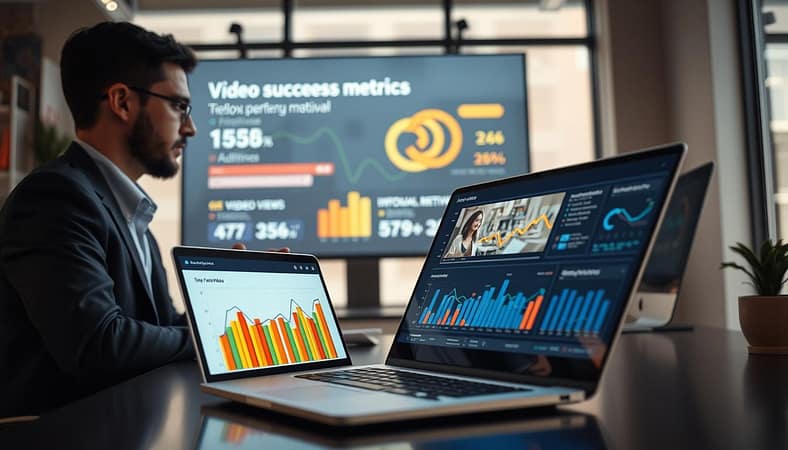
YouTube Analytics and Google Analytics are your tools. They give you the data you need. Your job is to understand what works and what doesn’t.
The Core Metrics That Actually Matter
Let’s look at the dashboard. Here are the important metrics you need to watch.
| Metric | What It Measures | The Real Story | Actionable Insight |
|---|---|---|---|
| Watch Time | Total minutes viewers spent with your content. | Your prime indicator of true engagement. Are people captivated or bouncing in 10 seconds? | Analyze retention graphs. If viewers drop off early, tighten your intro or pacing. |
| Traffic Sources | How viewers found your video (Search, Suggested, External sites, etc.). | This tells the origin story of your audience. Search traffic means your SEO is working. External links signal effective promotion. | Double down on the sources bringing your best viewers. Optimize titles/descriptions for search if that’s a weak spot. |
| Engagement Rate | Likes, comments, shares relative to views. | The temperature of your community. A high rate means you’re sparking conversation and connection. | Ask questions in your videos. Respond to comments to fuel the fire and build loyalty. |
| Audience Retention | The specific percentage of viewers staying at each moment. | A direct replay of your content’s hold on attention. It shows exactly where you lost people. | Identify drop-off points. Was it a slow segment? A confusing transition? Edit with this data. |
Watch time is your north star. It’s what platforms reward most. A video with a million views but bad retention is fleeting. But a video with solid watch time builds authority and reach over time.
Traffic sources show your strategy. Is your audience finding you via search? Great—your keyword game is strong. Are they coming from external websites or social shares? Your promotion efforts are paying off. Direct traffic? You’ve cultivated a dedicated fanbase that seeks you out.
The engagement rate shows your community’s pulse. Comments and shares are valuable. They amplify your reach and signal to algorithms that your content is worth talking about. A like is a nod; a comment is a handshake.
Making Data-Driven Decisions
Raw numbers are just trivia. The magic happens in the analysis. This is where you make data-driven decisions.
Compare the performance of similar videos. Did the one with a bold thumbnail outperform? Did a shorter format have better retention? Your analytics are a lab for constant experimentation.
Set simple goals. Aim to increase your average watch time by 10% next month. Try to boost your search traffic by optimizing two older videos. Small, measurable goals create momentum.
Remember, this isn’t about chasing perfection. It’s about informed iteration. Use these success metrics as your guide. They transform a hobby into a strategy and content creation into a calculated craft.
Getting Your First Views
Getting those first 100 views is like climbing a digital Everest. It’s the cold-start problem. The algorithm isn’t your friend yet. It’s waiting for proof of life.
You must become your own publicity engine. Your existing network is your launchpad. Send your new video to your email list with a genuine, personal note. This isn’t spam. It’s a curated premiere for your most invested audience.
Cross-post strategically. Upload to YouTube for discoverability. Use Vimeo for a cleaner, ad-free presentation you can embed elsewhere. Cast a wider net without being repetitive.
Now, the slightly awkward but critical step: ask for the share. Politely nudge colleagues. Post in relevant professional groups where the content provides value. A few initial likes and comments act as social proof. They signal to the platform’s algorithm that your video is worth promoting.
Think of it like a book launch. You host a party for friends and family first. That early buzz convinces the bookstore to put you in the window. Your social media presence keeps the conversation going, turning casual viewers into regular website traffic.
This initial push isn’t gaming the system. It’s providing the kindling so the algorithmic fire can catch. Be human. Be strategic. Use every legitimate lever you have. Your first viewers are waiting; you just need to show them where to look.