
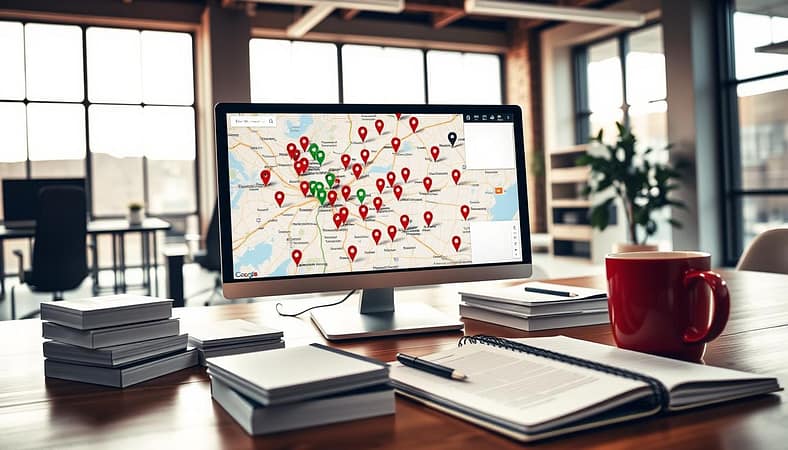
For any business with a storefront or service area, being found online by nearby customers is key. Local search engine optimization makes this happen. It boosts your online visibility in a specific area.
The main goal is simple: connect with customers when they search for what you offer. You want to show up when someone searches for a “plumber near me” or “best coffee shop downtown.”
Google uses three main factors to decide where to place businesses: Relevance, Distance, and Prominence. Getting these right can get you in the Local Pack—the map results with business profiles—or in the standard organic listings.
The benefits are big. The first result on Google gets an average click-through rate of 27.6%. Being at the top can drive more foot traffic and calls.
Building local citations—consistent listings of your business name, address, and phone number across the web—is a key step. It shows Google your business is prominent and relevant. For more on these tactics, check out our guide on optimizing local SEO.
Optimizing Google My Business
Effective GMB optimization turns a simple listing into a powerful tool for customer interaction. It’s your direct link to people searching for you locally. This process needs a strategic and detailed approach.
Start by claiming and verifying your Google Business Profile. This proves you’re the real owner. Make sure your Name, Address, and Phone number (NAP) match everywhere online.
Choosing the right categories is key. Pick your primary and secondary categories carefully. For example, a cafe should choose “Cafe” as its primary category, not just “Restaurant.”
Attributes help target specific audiences. Use tags like ‘women-led,’ ‘pet-friendly,’ or ‘free Wi-Fi’ to attract certain groups. These details make your listing stand out.
Your business description should be clear and engaging. Write a compelling summary of what you offer and who you serve. Use natural language that includes your main services.
Sharing content regularly keeps your profile active. Google rewards fresh content with better visibility. Different post types serve different goals.
| Post Type | Best For | Key Elements | Expected Impact |
|---|---|---|---|
| Offer Post | Promotions, discounts, sales | Clear title, compelling offer, expiration date, call-to-action button | Drive immediate clicks and store visits |
| Update Post | News, announcements, new hires | Engaging headline, relevant details, high-quality image | Build brand narrative and community |
| Event Post | Workshops, grand openings, sales events | Event name, date/time, description, ticket link if applicable | Increase awareness and attendance for local events |
| Product Post | Highlighting specific items or services | Product name, price, description, clear photo | Showcase inventory and drive consideration |

Visual content builds trust. Upload high-quality photos and videos of your products, services, team, and interior. A good gallery makes your business feel real and inviting.
Reviews are key social proof. Encourage happy customers to leave feedback. More importantly, respond to every review, both positive and negative. This shows you value customer input and manage your reputation.
Keep an eye on the Questions & Answers section. Add common FAQs and quickly answer user-submitted questions. This prevents misinformation and helps customers make decisions.
For complete GMB optimization, list your key products and services on the profile. Enable messaging for direct communication with customers. Always update your business hours, including holidays.
Use Google Business Profile Insights to track how customers find your listing and what actions they take. This data helps improve your strategy and investment.
Your Google Business Profile is more than a listing. It’s the center of your local online presence. A well-optimized profile boosts your visibility, relevance, and drives customer actions.
Building Local Citations and Backlinks
A good website and a well-optimized Google My Business profile are key. But, your business’s real power comes from a network of consistent citations and backlinks. These digital references show search engines your business is real, trusted, and active in the community.
Your NAP—Name, Address, and Phone number—is the foundation. NAP consistency is non-negotiable. Even small differences, like “St.” vs. “Street,” can confuse search engines and hurt customer trust. Start by checking and standardizing your NAP everywhere online.
It’s important to know the difference between local citations and backlinks. A local citation is any online mention of your NAP, found on directories, association sites, or local news. A local backlink is a hyperlink from another website to yours. Both are important, but they serve different roles in building your local SEO profile.
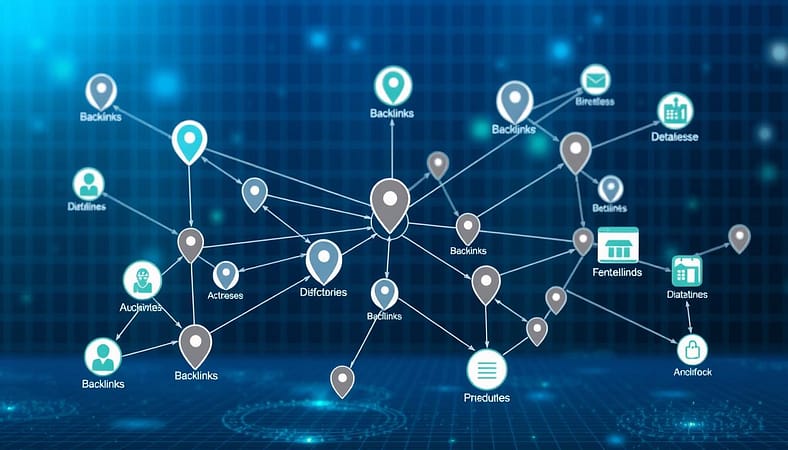
Start building local citations by submitting to core data aggregators like Acxiom, Infogroup, and Localeze. These services share your business data with many other platforms. Then, focus on reputable local directories.
- Industry-specific directories (e.g., a plumber on HomeAdvisor).
- Your local Chamber of Commerce website.
- Regional business journals and community news sites.
Earning local backlinks needs a strategic approach. It’s about building relationships and creating value. You can get these links by sponsoring a community team, being featured in local news, or working with a complementary business. A link from a trusted local site is a primary signal of prominence to Google.
| Component | Primary Purpose | Key Platforms | SEO Impact |
|---|---|---|---|
| Local Citations | Verify business identity & location (NAP consistency). | Data Aggregators, Yelp, YellowPages, Industry Directories. | Builds foundation for local pack eligibility and trust. |
| Local Backlinks | Signal authority & community relevance. | Local News Sites, Community Blogs, Partner Business Sites. | Directly boosts local search rankings and domain authority. |
Citations tell Google *who* and *where* you are. Backlinks tell Google *why* you matter. A business with perfect NAP consistency and quality backlinks from local sources is seen as a community leader. For more details, check out our guide on local SEO citations. Together, they show your business’s local prominence.
Encouraging and Managing Reviews
Online reviews are like word-of-mouth, but louder. They help build trust and attract customers. Search engines see them as a key factor in ranking local businesses.
88% of people look at reviews before visiting a local business. This means your reviews are often the first thing people see. It’s a chance to make a great first impression.
To get more positive reviews, you need a smart plan. Make it easy and rewarding for happy customers to share their thoughts. Don’t offer money or gifts for good reviews. Instead, try these:
- Ask at the Right Moment: Ask for a review right after a good experience.
- Simplify the Process: Send a link to your review page via email or text.
- Train Your Team: Teach staff to politely ask for feedback.
- Use On-Site Signage: A small sign or note can remind people to review.
It’s just as important to manage reviews as it is to get them. Always respond to every review, good or bad. Say thank you for positive feedback to encourage more. For negative reviews, be professional and offer to fix the issue privately.
When dealing with criticism, stay calm and listen. Acknowledge the issue and offer to solve it offline. This shows you value feedback and are willing to improve.
This whole plan relies on NAP consistency. If your business info is wrong online, people might review the wrong place. Accurate listings help your reputation and SEO.
Good review management creates a positive cycle. It builds trust, attracts more customers, and boosts your online reputation. Your reputation is now your most valuable marketing tool.
Tracking Local Search Performance
Data turns local SEO into a science, starting with tracking your search performance. Successful campaigns rely on evidence, not guesses. By measuring the right metrics, you can see what works for your local audience.
First, define your Key Performance Indicators (KPIs). For local search, these metrics go beyond website visits. They show real customer intent and engagement.
Your Google Business Profile Insights dashboard is key for this data. Here, you see how customers found your listing. Look at the “Customer actions” section for calls, website visits, and directions requests. A rise in direction requests shows strong local intent.
Analyzing search query trends in Insights is vital for GMB optimization. A sudden increase in “emergency plumbing service” searches means it’s time to update your services. Also, track which photos get the most views to see what customers want to see.
But don’t just look at your Business Profile. Monitor your ranking for local keywords like “best coffee shop near [City].” Use rank tracking tools and Google Analytics to analyze traffic to location-specific pages. Look at time on page and conversion rates to understand engagement.
Regularly reviewing this data helps you move from guesswork to strategy. You’ll see which posts get the most clicks, which services are in demand, and where you need to improve. This guides your budget and effort. For a simpler approach, consider local SEO tools for beginners to manage this data.
Tracking is more than reporting; it’s about learning and adapting. The insights you gather help refine your GMB optimization strategy. This ensures your business stays relevant and visible to your local community.
Leveraging Local Events for SEO
Local events are a great way to boost your SEO. By sponsoring a festival or hosting a workshop, you show your business cares about the community. This real-world effort can help your online presence grow.
Make sure to share your event online. Post about it on your Google Business Profile and write a blog article. Share photos and videos on Facebook and Instagram. This content attracts people looking for local events.
Being active in your community helps build trust in your brand. It can lead to mentions on event websites and local news. Each mention helps your business stand out locally.
Always keep your business details the same on all event materials. This means your name, address, and phone number should match everywhere. This consistency is key for search engines to trust your local presence.