
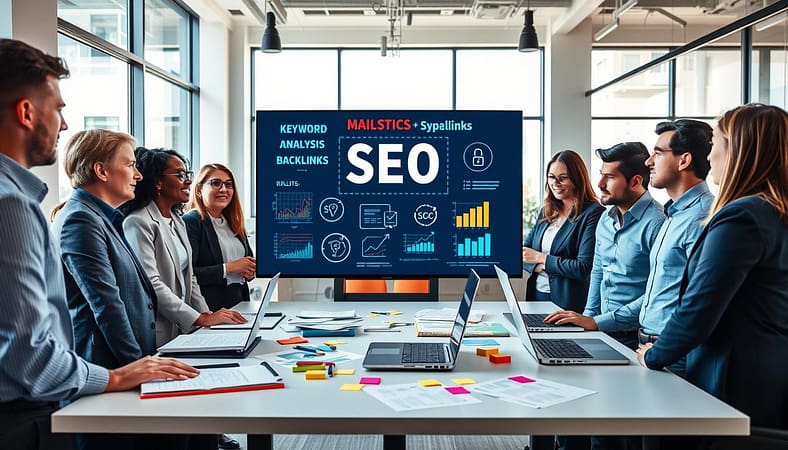
Ever feel like you’re shouting into the void online? You’re not alone. Most websites vanish into Google’s algorithmic abyss because they treat search visibility as an afterthought.
Search engine optimization—or SEO basics—is your digital Rosetta Stone. It helps Google’s crawlers understand your content. It also convinces users your site deserves their precious attention.
Think of it this way: showing up without SEO basics is like arriving at a black-tie event in sweatpants. You might be brilliant, but nobody will stick around to find out.
This isn’t mystical dark art—it’s architectural science for online relevance. Let’s pull back the curtain on how search engines really work.
Benefits for Any Website Owner
Think of SEO as your digital real estate agent. It doesn’t just find you a prime location; it makes sure people visit. While others spend on digital billboards, smart owners focus on organic visibility.
Quality content turns your brand into a trusted authority. When users find what they need, they don’t just visit. They engage, share, and come back. It’s like having a favorite bookstore in a world of digital recommendations.
When search engines see your value, magic happens. Proper SEO tells Google, “This website solves real problems.” You then show up when it matters most to customers.
Let’s look at the real benefits:
- Credibility boost: Top search engine rankings mean trust – like a Michelin star for your content
- Qualified traffic: These aren’t random clicks but people looking for what you offer
- Sustainable growth: Unlike paid ads, SEO keeps working even when funding stops
- Cost efficiency: Why pay for attention when you can earn it through smart optimization?
Businesses that use SEO well see a big change. Their organic traffic grows, while others struggle. It’s like watching digital ghosts become industry leaders.
Being at the top of search results isn’t just about being seen. It’s about strategic positioning. You’re having targeted conversations with people who want to listen. In today’s world, SEO benefits are your megaphone without the noise.
The best thing? SEO isn’t a mystery. It’s about knowing what search engines want and creating valuable content. When you get it right, you’re not just playing the game. You’re changing it.
Key On-Page Ranking Factors
Think of on-page SEO as your website’s first impression at a digital cocktail party. You wouldn’t show up with spinach in your teeth, would you? Yet, many websites make similar mistakes with their metadata and content structure.
Title tags are your digital handshake – the first thing users and search engines notice. They’re prime real estate in search results, yet most businesses waste them on corporate jargon that wouldn’t excite a caffeine-deprived intern.
Meta descriptions serve as your 150-character elevator pitch. They’re not direct ranking factors, but they dramatically impact click-through rates. A compelling meta description is like a movie trailer that makes people want to see the full feature.
Header tags (H2s, H3s) organize your content like chapters in a bestseller. They create logical flow that both users and search engines follow like breadcrumbs. Proper header structure tells Google exactly what your content is about without being pushy about it.
Content optimization goes beyond keyword placement. It’s about creating value that answers searchers’ questions better than competing pages. Your content should read like a conversation with a knowledgeable friend, not a textbook from 1998.
Alt text often gets treated like digital wallpaper, but it’s actually critical for accessibility and SEO. These descriptive image tags serve as subtitles for both visually impaired users and search algorithms. They’re your chance to describe visual content to those who can’t see it.
According to Search Engine Journal’s guide on essential on-page SEO factors, these elements work together like instruments in an orchestra. When harmonized properly, they create a symphony that search engines can’t ignore.
| On-Page Element | Primary Function | Common Mistakes | Optimal Approach |
|---|---|---|---|
| Title Tags | Search result headlines | Too generic or lengthy | 55-60 characters with primary keyword |
| Meta Descriptions | Click-through encouragement | Duplicate content across pages | Unique, compelling summaries under 155 chars |
| Header Tags | Content organization | Using for styling instead of structure | Logical hierarchy with semantic keywords |
| Alt Text | Image context for algorithms | Keyword stuffing or leaving blank | Descriptive, natural language context |
| Content Quality | User engagement and value | Thin content or keyword stuffing | Comprehensive, natural language coverage |
Mastering these elements is like learning the grammar of search engine communication. You’re not just optimizing for algorithms – you’re creating better experiences for real human beings. And in the end, that’s what separates ranking champions from also-rans.
Remember: great on-page SEO feels invisible to users but obvious to search engines. It’s the digital equivalent of a perfectly tailored suit – nobody notices the stitching, but everyone notices how good it looks.
Essential Tools for Beginners
Ever tried assembling IKEA furniture without the Allen wrench? It’s like trying SEO without the right tools—it’s frustrating and doesn’t work well. Today, you can get the right tools without spending a lot.
Google Search Console is key for your website. It shows crawl errors and what searches bring in traffic. It’s like a health check for your site.
Bing Webmaster Tools is often overlooked, but it’s important. With Bing’s growing search share, ignoring it is a mistake. It catches issues Google might miss.
Keyword research is a must for SEO pros. Many business owners guess what customers search for. Tools like Moz’s Keyword Explorer show what people really search for.
Content creation tools have improved a lot. Search Atlas AI Writer helps write content fast. It’s like having a smart assistant who never gets tired.
Start with free tools to learn SEO basics. It’s like making a movie on an iPhone. You learn the basics before moving to more advanced tools.
| Tool Type | Free Option | Premium Upgrade | Best For |
|---|---|---|---|
| Rank Tracking | Google Search Console | SEMrush Position Tracking | Monitoring keyword performance |
| Keyword Research | Google Keyword Planner | Ahrefs Keywords Explorer | Finding content opportunities |
| Content Optimization | Search Atlas Free Tier | Frase.io | Creating SEO-friendly content |
| Technical SEO | Screaming Frog Free Version | Sitebulb | Identifying site structure issues |
Technical SEO tools like Screaming Frog find site problems. The free version checks up to 500 URLs, which is plenty for beginners.
Remember, tools are just a means to an end. The goal is to choose tools that help you. Start small, learn the basics, and grow as you get better.
Myth-Busting Popular Misconceptions
Let’s uncover the SEO myths that keep website owners stuck. The truth about search engine ranking is often hidden. It’s buried under outdated advice and wishful thinking.
Keyword stuffing is a thing of the past. It used to be about repeating target words over and over. But Google’s algorithms have moved on. They now look at context, semantics, and what users want, not just repetition.
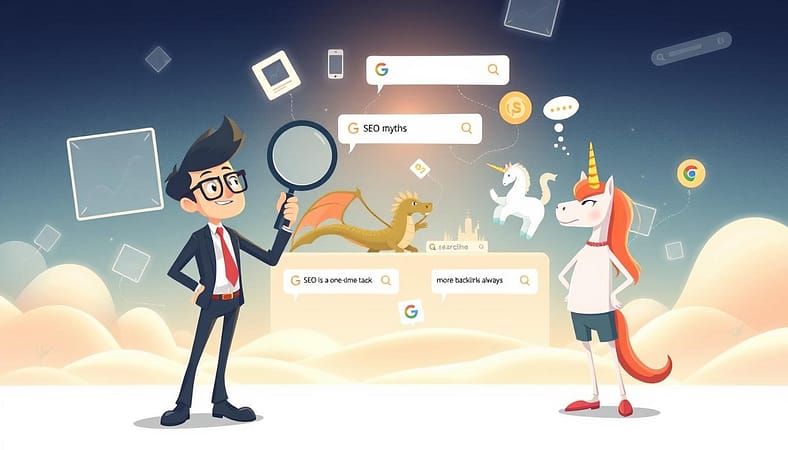
The meta keywords tag is a relic. Google stopped using it for ranking a long time ago. Yet, I see businesses wasting time on it, like it’s a digital fossil.
Another myth is that more backlinks mean better rankings. This is like thinking more Facebook friends make you popular. But quality backlinks are what truly matter.
Here’s a simple truth table to debunk the most common myths:
| Myth | Reality | Why It Matters |
|---|---|---|
| Exact keyword density matters | Semantic relevance rules | Google understands synonyms and context |
| Meta keywords boost ranking | Complete waste of time | Google ignores this tag entirely |
| All backlinks are equal | Quality beats quantity | Spammy links can actually hurt you |
| Mobile optimization is optional | Mobile-first indexing is mandatory | Google mainly uses mobile version for ranking |
| Longer content always ranks better | Comprehensive beats lengthy | Quality and completeness matter most |
Mobile optimization is now a must, not just a nice feature. Google uses mobile-first indexing. This means your mobile site’s performance greatly affects your search engine ranking.
Content length is also misunderstood. While detailed content is better, adding too many words won’t help. Google wants thorough answers, not endless text.
The real secret? Create content that helps people. Google’s main goal is to satisfy searchers. For more insights, check out our complete guide to SEO myths that might be holding your site back.
SEO changes fast, like fashion trends. Stay updated or risk being left behind.
How Search Engines Work
Ever wonder how Google answers your questions so fast? It’s not magic—it’s a complex system. It uses crawling, indexing, and ranking to find and rank web pages. It’s like a super-efficient library system with super-caffeinated librarians.
First, Google’s digital spiders crawl the web. They follow links to find new pages. Every link is a chance to discover new content.
Then, indexing sorts out the pages. Google’s index is like a huge card catalog for the internet. It deals with duplicate content by choosing one “canonical” URL.
Why is this important for beginner SEO? Bad site structure wastes the crawlers’ time. It’s like sending a food critic to the wrong place.
Ranking is the final step. Google chooses the best pages for your search. It looks at many things, like content quality and how fast the page loads.
- Content relevance and quality
- User experience signals like loading speed
- Semantic relationships between concepts
- Authority metrics through backlinks
Google now understands what you mean by your search. It knows “apple” can mean different things. This is like a sommelier pairing wine with food.
For those starting beginner SEO, understanding this helps a lot. You’re not just making content. You’re building experiences for people and search engines. Now you know how to make it work for you.
Measuring SEO Progress
SEO measurement is key to success in digital marketing. It separates the pros from the dreamers. Too many businesses just guess and hope, while others use precise metrics.
Start with the basics. Organic traffic shows how many people find you online. It’s like foot traffic in a store. More visitors are good, but quality matters too.

Keyword rankings show your position in search results. It’s like a GPS. But ranking high for no one’s search terms is pointless.
Click-through rate (CTR) shows how good your search snippets are. It’s like a store’s appeal. If your menu looks dull, no one will come in.
Bounce rate reveals if visitors stay or leave quickly. A high bounce rate means they’re not interested. It’s like a bad first date.
Some businesses focus on looks over substance. Ranking high is useless if no one buys. It’s like dating for looks alone.
Connecting these metrics is the key. Good rankings but low CTR mean your titles need work. Good traffic but high bounce rate means your content is off.
Start tracking with Google Analytics. It’s free and shows you the truth. Connect it with Search Console for even more insight.
Remember, what you measure, you can improve. What you improve, you’ll see results. Results are what make you a digital pro.
FAQ
How long until my changes affect search engine ranking? Google works on its own schedule. Some fixes might show results in days, while others can take months. It’s like waiting for a fine wine to age, not expecting instant coffee results.
Is keyword stuffing a bad idea? Yes, it is. It’s like shouting your name at a networking event—it’s annoying and doesn’t work. Google’s algorithms have moved beyond such simple tactics.
Does mobile optimization really matter? In 2024, asking if mobile matters is like questioning if cars need wheels. Most searches are on phones, so mobile-friendliness is key to your ranking.
What about AI-generated content? Tools like ChatGPT can help, but they can’t replace human creativity and originality. Google values quality content that meets real user needs, as explained in their SEO starter guide.
Are Google penalties common? Algorithm updates happen all the time, but penalties are rare. Focus on making quality content instead of worrying about Google penalties.